US$ 813.00
ex. VAT, ex. delivery costs
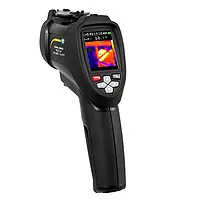
The Thermal Camera PCE-TC 28 was designed for taking non-contact temperature measurements. To get accurate readings, the emissivity of the thermal camera can be adjusted, depending on the operation purpose. Besides taking infrared images, the camera can also take normal pictures, as well as a mixture of both, due to the built-in digital camera. This kind of test instruments help electricians and and maintenance workes in condition monitoring.
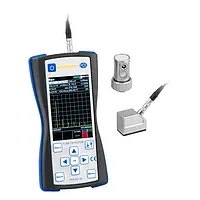
PCE-FD 20 is a portable ultrasonic tester or ultrasonic thickness gauge with a large LCD screen that displays A-scan maps of ultrasonic signals as well as B-scan cross sections. Ideal for use in mechanical engineering, aerospace and metallurgical applications, this high-frequency ultrasound-based thickness meter uses a contact transducer (two different probes included; 45° and 90°) to measure material thickness and identify flaws and defects such as discontinuity in welds. These test instruments are calibrated by the manufacturer. An ISO calibration certificate is an option.
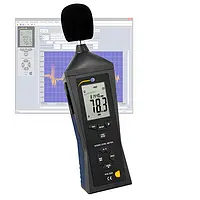

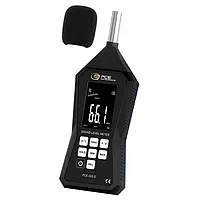
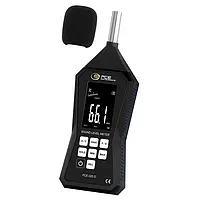
PCE-322A is a handheld, portable, professional Class II sound test instrument, sound level meter or decibel (dB) meter with built-in data-logging or data-recording functionality. Thus, PCE-322A is ideal for real-time noise measurement as well as for long-term noise exposure monitoring over time.
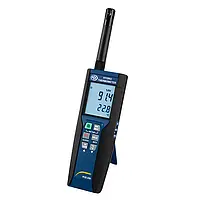
PCE-330 is a multifunction heat stress meter or humidity test instrument with a quick-response sensor for determining ambient temperature, relative humidity and dew point temperature. Equipped with an easy-to-read dual display, this data-logging indoor air quality (IAQ) meter features a large internal memory with storage for up to 16,000 recorded values.
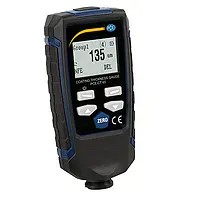
PCE-CT 65 is a coating thickness test instrument that uses magnetic induction (ferrous) or eddy current (non-ferrous) to take non-destructive measurements of coating and dry film thickness (DFT) on metal substrates such as steel and aluminum. This thickness gauge is ideal for painted and powder-coated surface testing, automotive paint inspection, coated material testing, and manufacturing quality control applications.
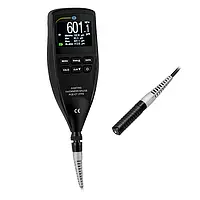
PCE-CT 27FN is a Thickness Test Instrument that takes non-destructive measurements of nonmagnetic coating, insulating layer and dry film thickness (DFT) on metal substrates such as steel and aluminum. Ideal for surface testing, automotive paint inspection, material testing and manufacturing quality control applications.
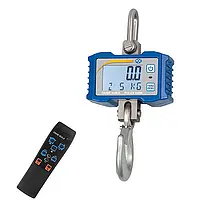
PCE-CS 1000N is a digital, electronic, battery-powered Force Test Instrument that displays measurement values in kilograms (kg) or pounds (lbs). The scale comes factory calibrated and includes a hook, shackle and remote control. For an additional fee, the scale can be calibrated according to ISO standards.
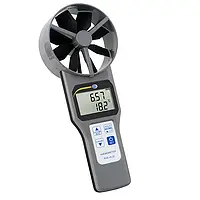
PCE-VA 20 is a multifunction airflow test instrument for assessing wind, weather, indoor / outdoor environmental climate conditions as well as for testing heating, ventilation and air conditioning or cooling (HVAC) systems. This combination anemometer-hygrometer-thermometer features a 10 cm / 3.9" Ø fan impeller, easy-to-read backlit LCD, and functions such as display hold, average value, maximum value, minimum value, battery-saving automatic power off, low-battery indicator, and metric or imperial unit selection.
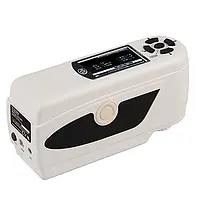
The color meter PCE-CSM 3 was developed for quality control and offers a very high accuracy reading. When using the color meter, you can choose between different color spaces (CIE L*a*b*C*h, CIE L*a*b*). After a measurement with these color test instruments, the reading can be used as a reference value while other readings can be recorded as a sample and later be compared to the 100 reference value easily.
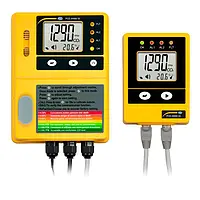
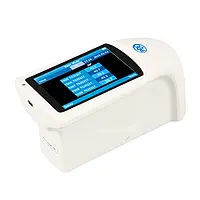
The PCE-SGM 60 gloss meter with small measuring area is used on many types of surfaces to quantify their gloss units. This gloss-measuring device operates on the reflection principle by sending light from a calibrated light source onto the surface to be tested and then calculates the gloss level of the surface according to the reflection of light particles. These gloss test instruments allow you to measure very high gloss surfaces above 70 gloss units (GU).
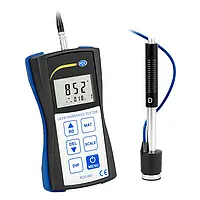
The Leeb Hardness Test Instrument PCE-900 measures the hardness of nine different metals using the Leeb rebound method. This means that with the hardness test instrument a firing pin bounces on a metallic surface and the intensity of the rebound is used as an indicator of the material hardness. The hardness test instrument PCE-900 measures the metal hardness in 6 different hardness scales.
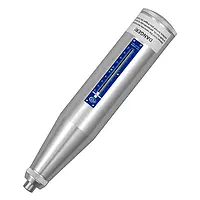
PCE-HT-225A is a heavy-duty concrete hardness tester or concrete test hammer, also called a concrete rebound hammer or Swiss hammer, used to measure surface hardness and material compression strength. Suitable for use with concrete, rock and building materials, this rugged, manufacturer-calibrated rebound hammer is both easy to use and built to last.
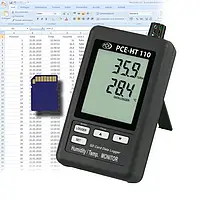
The PCE-HT110 Humidity Test Instrument or Humidity Detector precisely measures air temperature and relative humidity. This accurate and reliable device shows the current measurements on the large LCD display and saves the measurement data directly to an SD card (included). The PCE-HT110 is equipped with two channels, accommodates an SD card memory of up to 16 GB, offers an adjustable measurement rate / sampling interval, and includes a wall mount, making the device ideal for logging data over an extended period of time.
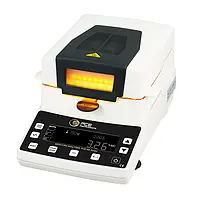
PCE-MA 110 is a halogen moisture test instrument or analyzer that functions on the gravimetric or loss on drying (LOD) principle. The moisture analyzer uses the halogen method to dry the material sample. Moisture content is calculated based on the weight difference before and after the drying procedure. Calibration of the moisture analyzer can be performed at any time using the automatic calibration function and the included 100 g weight.
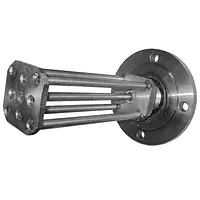
The moisture analyzer is a sensor for measuring moisture of sand and liquids consisting of a central probe surrounded by four other probes. The probes and sensor housing are made of stainless steel AISI 321. Our moisture analyzer is ideally suited for installation in tanks with liquid materials such as fuel oil, sludge from cement production, and fuels (CWF).
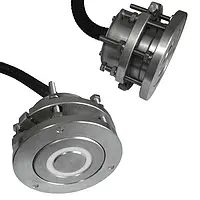
For industrial continuous production of wood pellets, chips, sawdust and similar materials when in-line moisture measurement for monitoring and controlling the drying and mixing process is important. Consistent quality of every batch, reduction of the consumption of materials, and shortest possible drying and mixing times are the criteria which are important in materials production. The PCE-MWM 210 moisture test sensor of PCE Instruments helps meet those criteria through highly accurate moisture measurement.
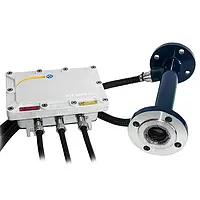
Moisture analyzer for liquid materials are used in boiler installations, water-dosing and diesel oil emulsion dispersion systems. The scope of supply can include the control cabinet to operate the valves regulating water feed. The moisture Analyzer for liquid materials has a processing unit with RS232/RS485 interfaces.
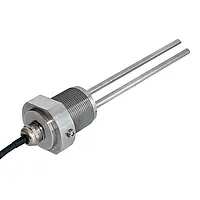
VHF-Band Moisture Analyzer Crushed Stone, Gravel, Ore (conveyor). The device is resistant to corrosion (stainless steel and dielectric materials) and can operate in the conditions deviating from the norm, for example, at temperatures of 145 °C. The moisture analyzer probe can be mounted on the walls in the hoppers, in pipelines or on trays in conveyors. Due to pluggable design this version of the moisture analyzer can also be used for soil moisture control.
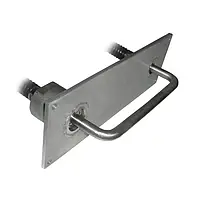
Designed specifically for use in moisture measurement of various bulk materials, these moisture analyzing test instruments are installed in bins, silos, troughs, bunkers, distributors, augers, and conveyors. Material in bulk or flowing mass, such as fibrous materials, gravel, sawdust, fly ash (mineral), wood chips (surface to 5 cm) feed grain, flour, seed, pastes, … is continuously measurable.
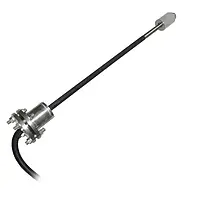
Suitable for determining the humidity of bulk substances, this moisture test instrument can be fitted into containers and systems such as troughs, bunkers, distributors, augers, conveyors, bins and silos. This permits 24/7 moisture measurement of fibrous materials, sawdust, gravel, fly ash (mineral), wood chips (surface to 5 cm) feed grain, flour, pastes, seed, or similar bulk or flowing substances. These test instruments / test sensors are mainly for use in manufacturing processes to give the opportunity of process optimization to the manufacturer or to insure the moisture content of the final product.
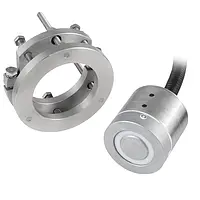
For industrial continuous production of wood pellets, chips, sawdust and similar materials when on-line moisture measurement for monitoring and controlling the drying and mixing process is important. Consistent quality of every batch, reduction of the consumption of materials, and shortest possible drying and mixing times are the criteria which are important in materials production. The PCE-MWM 300P moisture test sensor of PCE Instruments helps meet those criteria through highly accurate moisture measurement.
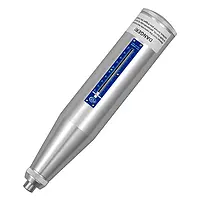
PCE-HT-225A is a heavy-duty roll hardness tester or concrete test hammer, also called a paper roll rebound hammer or Swiss hammer, used to measure surface hardness and material compression strength. Suitable for use with rolled paper, concrete, rock and building materials, this rugged, manufacturer-calibrated rebound hammer is both easy to use and built to last.
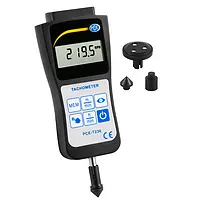
PCE-T236 is a digital handheld tachometer or rotation test instrument for both contact and non-contact measurement. This tachometer measures rotation speed as well as linear or surface speed, displaying units in rpm, m/min or ft/min. A unique feature of this tachometer is that the orientation of the 5-digit LCD screen automatically rotates 180° to accommodate either contact or non-contact measurement.
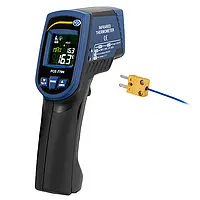
The Temperature Test Instrument PCE-779N measures temperatures quickly and without contact. The temperature test instrument can be used for almost all surfaces. The emissivity of these temperature test instruments is adjustable over the range of 0.1 … 1.0. The meter has various measurement functions such as max, min and average measurement. Each instrument comes manufacturer calibrated and can be certified according to the ISO standards as an option. In general our laboratory adjusts the temperature meter to two (linear) temperature points.