
US$ 8,860.00
ex. VAT, ex. delivery costs
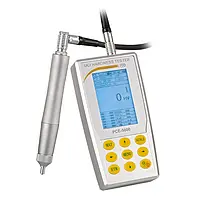
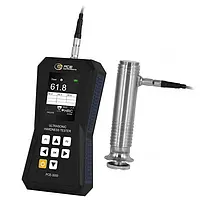
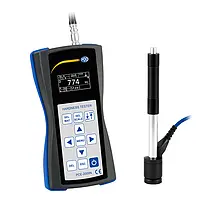
PCE-5000 is a portable hardness tester that uses the ASTM A1038 ultrasonic contact impedance (UCI) method to measure the hardness of metals and alloys with a minimum thickness of 2 mm / .08 in Non-destructive testing produces microscopic indentation.
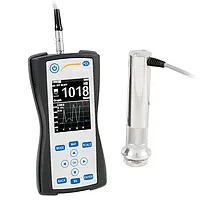
The Ultrasonic Contact Impedance (UCI) durometer PCE-3500 has been designed for the non-destructive hardness measurement of metallic components. A 136° Vickers diamond at the probe is stimulated with its self-resonance to allow the user to very accurately measure hardness of small items, thin-walled items (>1 mm), and surface-hardened layers. Small imprint after measuring for mirrored surfaces.
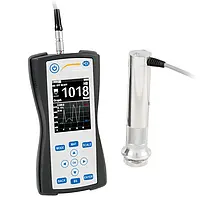
The Ultrasonic Contact Impedance (UCI) durometer PCE-3500 has been designed for the non-destructive hardness measurement of metallic components. A 136° Vickers diamond at the probe is stimulated with its self-resonance to allow the user to very accurately measure hardness of small items, thin-walled items (>1 mm), and surface-hardened layers. Small imprint after measuring for mirrored surfaces and nitrided surfaces.
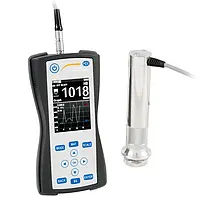
The Ultrasonic Contact Impedance (UCI) durometer PCE-3500 has been designed for the non-destructive hardness measurement of metallic components. A 136° Vickers diamond at the probe is stimulated with its self-resonance to allow the user to very accurately measure hardness of small items, thin-walled items (>1 mm), and surface-hardened layers. Small imprint after measuring for mirrored surfaces and nitrided surfaces.
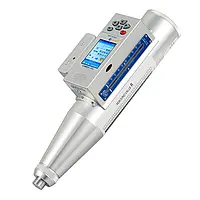
PCE-HT 225E is a hardness test hammer, also called a concrete rebound hammer or Swiss hammer, used for non-destructive measurements of surface hardness and compression strength. Suitable for use with concrete, rock and building materials, this rebound hammer features a direct digital display, voice functionality, USB port data interface and memory for storing up 200 measurement values.
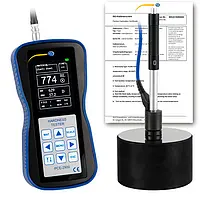

The hardness tester PCE-2900 has been developed for hardness measurements on metallic materials. The hardness tester PCE-2900 measures the material hardness in Vickers, Brinell, Rockwell, Leeb and Shore. The hardness tester PCE-2900 measures the hardness according to the Leeb rebound principle.

The hardness tester PCE-2900 has been developed for hardness measurements on metallic materials. The hardness tester PCE-2900 measures the material hardness in Vickers, Brinell, Rockwell, Leeb and Shore. The hardness tester PCE-2900 measures the hardness according to the Leeb rebound principle.
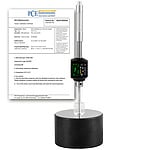
The Portable Metal Hardness Tester PCE-2600N-ICA is used wherever a fast hardness test has to be carried out. It is possible to use the hardness tester PCE-2600N-ICA to determine the surface hardness of many metals. The hardness tester PCE-2600N-ICA is especially suitable for quality or product inspection.
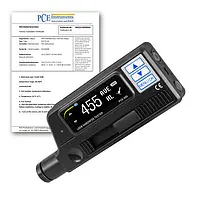
PCE-950-ICA is a handheld metal hardness tester used to determine the hardness of 10 different types of metal (i.e., cast steel, hammered steel, cold-rolled steel, stainless steel, cast iron, ductile iron, aluminum alloy, brass, bronze and forged copper alloy) according to the Leeb rebound method. In addition to Leeb hardness units, the metal hardness tester displays hardness measurements in Rockwell C, Rockwell B, Rockwell A, Brinell, Vickers and Shore hardness units.
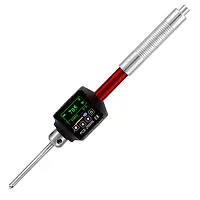
The Portable Metal Hardness Tester PCE-2600N is used wherever a fast hardness test has to be carried out. It is possible to use the hardness tester PCE-2600N to determine the surface hardness of many metals. The hardness tester PCE-2600N is especially suitable for quality or product inspection.
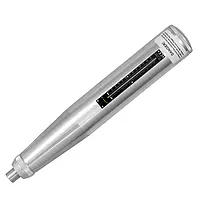
The concrete hardness tester is an analog measuring device to determine concrete strength. The measuring method of the concrete hardness tester is based on the Schmidt principle. With this measuring method, a kinetic impact energy hits the concrete from the concrete hardness tester. The resulting rebound enables the concrete hardness tester to determine the strength of the concrete.

PCE-2800 is a portable handheld material hardness tester or durometer designed for the quick and easy surface hardness testing of metals. This user-friendly device displays measurements in Rockwell A, B & C (HRA, HRB & HRC), Vickers (HV), Brinell (HB), Shore (HS) and Leeb (HLD) hardness units. It also indicates the tensile strength (N / mm²).
- Measurement ranges: 59.1 ... 85.8 HRA, 20 ... 68.5 HRC, 13.5 ... 101.7 HRB,
19 ... 651 HB, 32.2 ... 99.5 HS, 80 ... 976 HV, 350 ... 800 HLD, 374 ... 2652 (N / mm²)
- Accuracy: ± 6 HLD
- Data interface: USB 1.1 port
- Internal memory: Stores up to 100 data sets
- Impact device: Type D (external probe with 1.5 m / .06 in long cable)
- Printer is built into the device
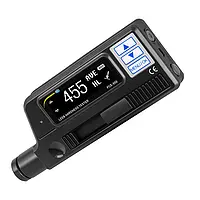
PCE-950 is a handheld metal hardness tester used to determine the hardness of 10 different types of metal (i.e., cast steel, hammered steel, cold-rolled steel, stainless steel, cast iron, ductile iron, aluminum alloy, brass, bronze and forged copper alloy) according to the Leeb rebound method. In addition to Leeb hardness units, the metal hardness tester displays hardness measurements in Rockwell C, Rockwell B, Rockwell A, Brinell, Vickers and Shore hardness units.
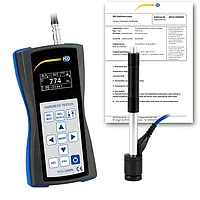
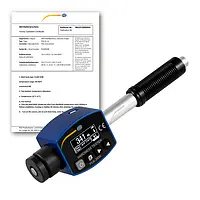
Due to its compact design, the PCE-2550-ICA hardness tester is easy to use for incoming and outgoing inspections. Due to the adjustable hardness scales, the hardness tester is very versatile.
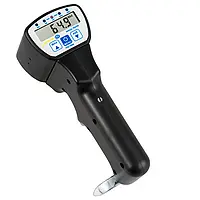
PCE-1000N is a portable handheld Barcol hardness tester used to measure the hardness of pure aluminum, soft aluminum, thick aluminum alloy and aluminum sheets, strips, rods, castings and forgings. The hardness of fiber-reinforced (FRP) plastics, glass-reinforced (GRP) plastics, hard plastics and soft metals (such as copper or lead) also can be tested using this battery-powered digital Barcol impressor hardness meter.
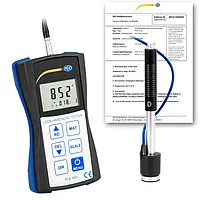
The Leeb Portable Metal Hardness Tester PCE-900-ICA measures the hardness of nine different metals using the Leeb rebound method. This means that with the material hardness tester a firing pin bounces on a metallic surface and the intensity of the rebound is used as an indicator of the material hardness. The Portable Metal Hardness Tester measures the metal hardness in 6 different hardness scales.
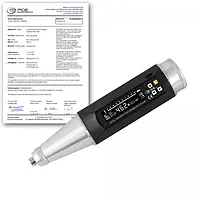
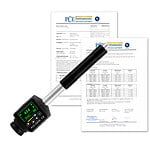
PCE-2500N-ICA is a portable handheld pen-sized digital material hardness tester, rebound hammer or durometer for use with metals. This high-accuracy hardness tester quickly and accurately measures the surface hardness of 10 common metal materials including steel, cast steel, alloy tool steel, stainless steel, cast iron, ductile iron, cast aluminum alloy, brass, bronze and copper.
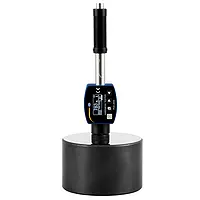
Due to its compact design, the PCE-2550 hardness tester is easy to use for incoming and outgoing inspections. Due to the adjustable hardness scales, the hardness tester PCE-2550 is very versatile.
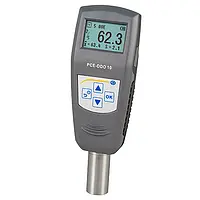
The PCE-DDO 10 hardness tester is an ergonomic device to check Shore O hardness in gum. It has been designed with a high quality. The PCE-DDO 10 hardness tester is mainly used for soft gums. If the material thickness is not enough, it should be tightened on the back with the same material in order to increase its thickness.
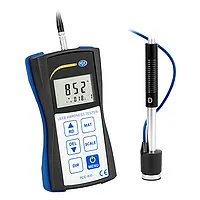
The Leeb Portable Metal Hardness Tester PCE-900 measures the hardness of nine different metals using the Leeb rebound method. This means that with the portable metal hardness tester a firing pin bounces on a metallic surface and the intensity of the rebound is used as an indicator of the material hardness. The Portable Metal Hardness Tester PCE-900 measures the metal hardness in 6 different hardness scales.
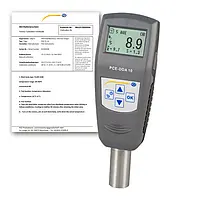
The PCE-DDA 10 shore hardness tester is an ergonomic device to check Shore hardness in gum, plastic and other non-metallic materials. It has been designed with a very high quality. The PCE-DDA 10 hardness tester is mainly used for soft gums, elastomers, natural rubber, neoprenes, casting resin, white PVC, leather, etc. It has a reading accuracy of 0.1 hardness units.
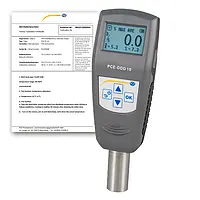
The PCE-DDD 10 shore hardness tester is an ergonomic device to check Shore D hardness in materials such as hard rubber and thermoplastic. It has been designed with a very high quality.
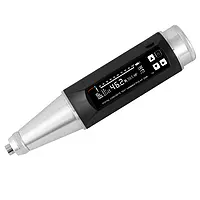

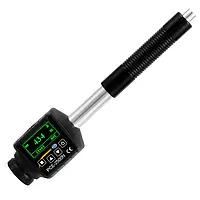
PCE-2500N is a portable handheld pen-sized digital material hardness tester, rebound hammer or durometer for use with metals. This high-accuracy hardness tester quickly and accurately measures the surface hardness of 10 common metal materials including steel, cast steel, alloy tool steel, stainless steel, cast iron, ductile iron, cast aluminum alloy, brass, bronze and copper.
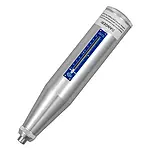

The PCE-HT-75 Concrete Hardness Tester is easy to use and is fundamentally used in the construction industry as well as other industrial sectors (testing for Wickel hardness of rolls in commodities). This Hardness Tester in the form of a hammer device for testing concrete is based on the Swiss principle of measurement.
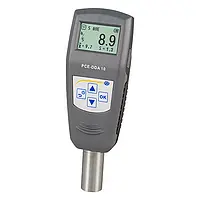
The PCE-DDA 10 shore hardness tester is an ergonomic device to check Shore hardness in gum, plastic and other non-metallic materials. It has been designed with a very high quality. The PCE-DDA 10 durometer is mainly used for soft gums, elastomers, natural rubber, neoprenes, casting resin, white PVC, leather, etc. It has a reading accuracy of 0.1 hardness units. The durometer (as all test instruments) comes manufacturer calibrated and can additionally be lab certified to ISO standards.
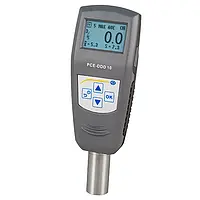
The PCE-DDD 10 shore hardness tester and durometer is an ergonomic device to check Shore D hardness in materials such as hard rubber and thermoplastic. It has been designed with a very high quality. The durometer (as all test instruments) comes manufacturer calibrated and can additionally be lab certified to ISO standards.
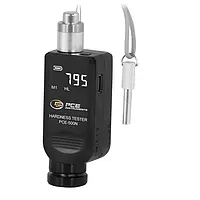
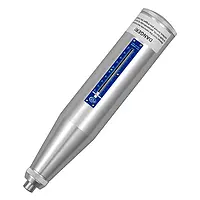
PCE-HT-225A is a heavy-duty concrete hardness tester or concrete test hammer, also called a concrete rebound hammer or Swiss hammer, used to measure surface hardness and material compression strength. Suitable for use with concrete, rock and building materials, this rugged, manufacturer-calibrated rebound hammer is both easy to use and built to last.
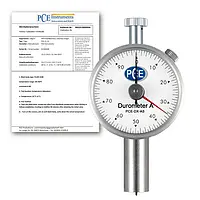
Mechanical shore hardness tester for measuring hardness of soft elastomer with drag needle. The shore hardness tester is composed of a single component with a measuring head and a 360º dial. To improve the readability of peak value, the device comes with a drag needle, that ensures the maximum reading can be captured. Once it has been measured, it can be reset to zero.
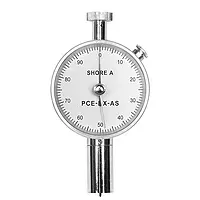
Mechanical hardness tester for measuring hardness of soft elastomer with drag needle. The shore hardness tester is composed of a single component with a measuring head and a 360º dial. To improve the readability of peak value, the device comes with a drag needle, that ensures the maximum reading can be captured. Once it has been measured, it can be reset to zero.
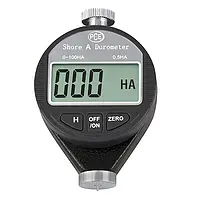
The PCE-DD-A hardness tester is used to measure Shore A hardness in soft gums, rubber, elastomers and more. Calibration is not available for this item.