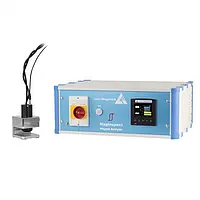
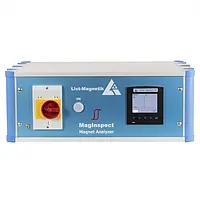
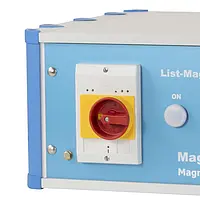
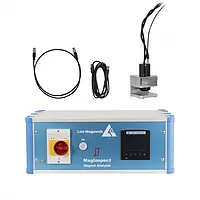
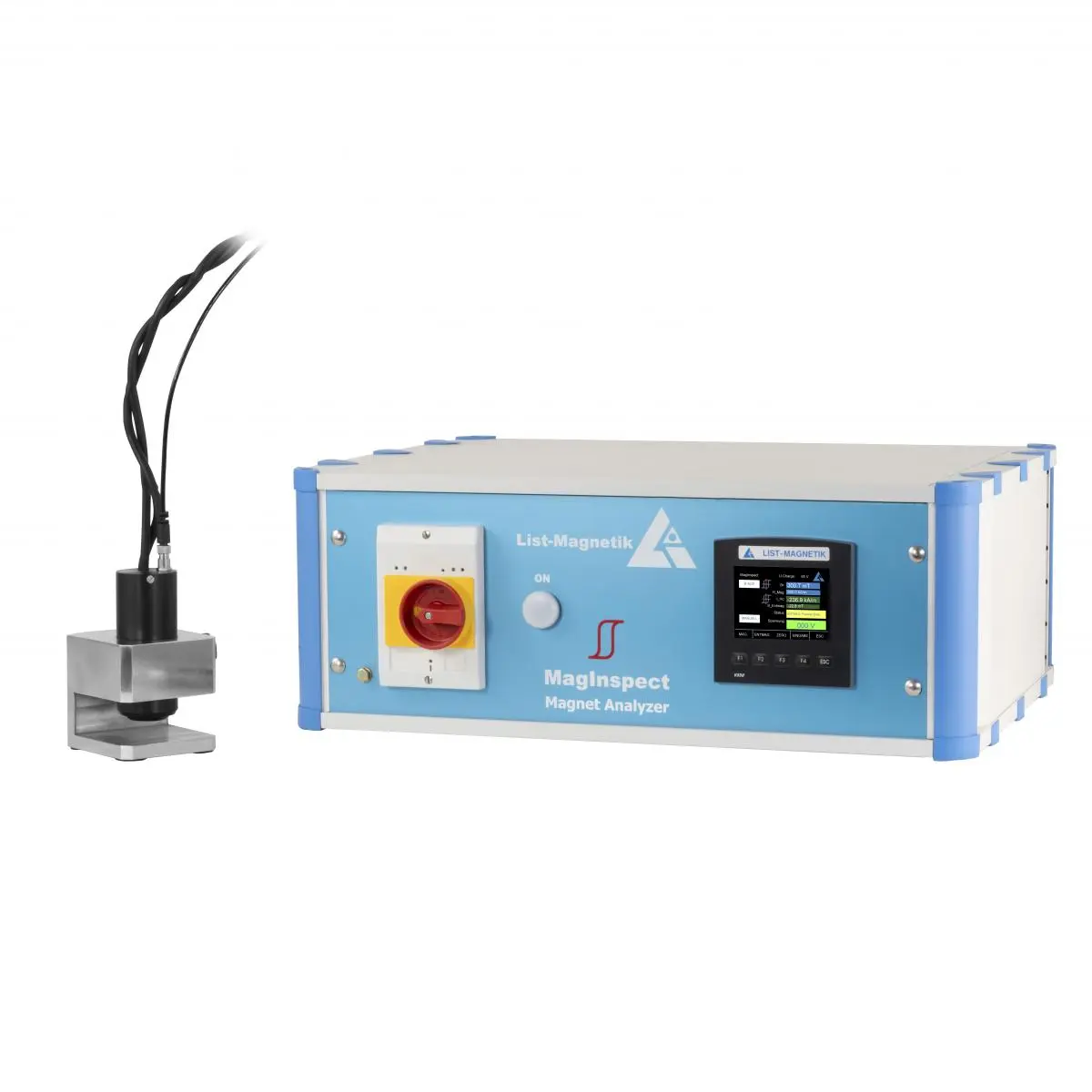
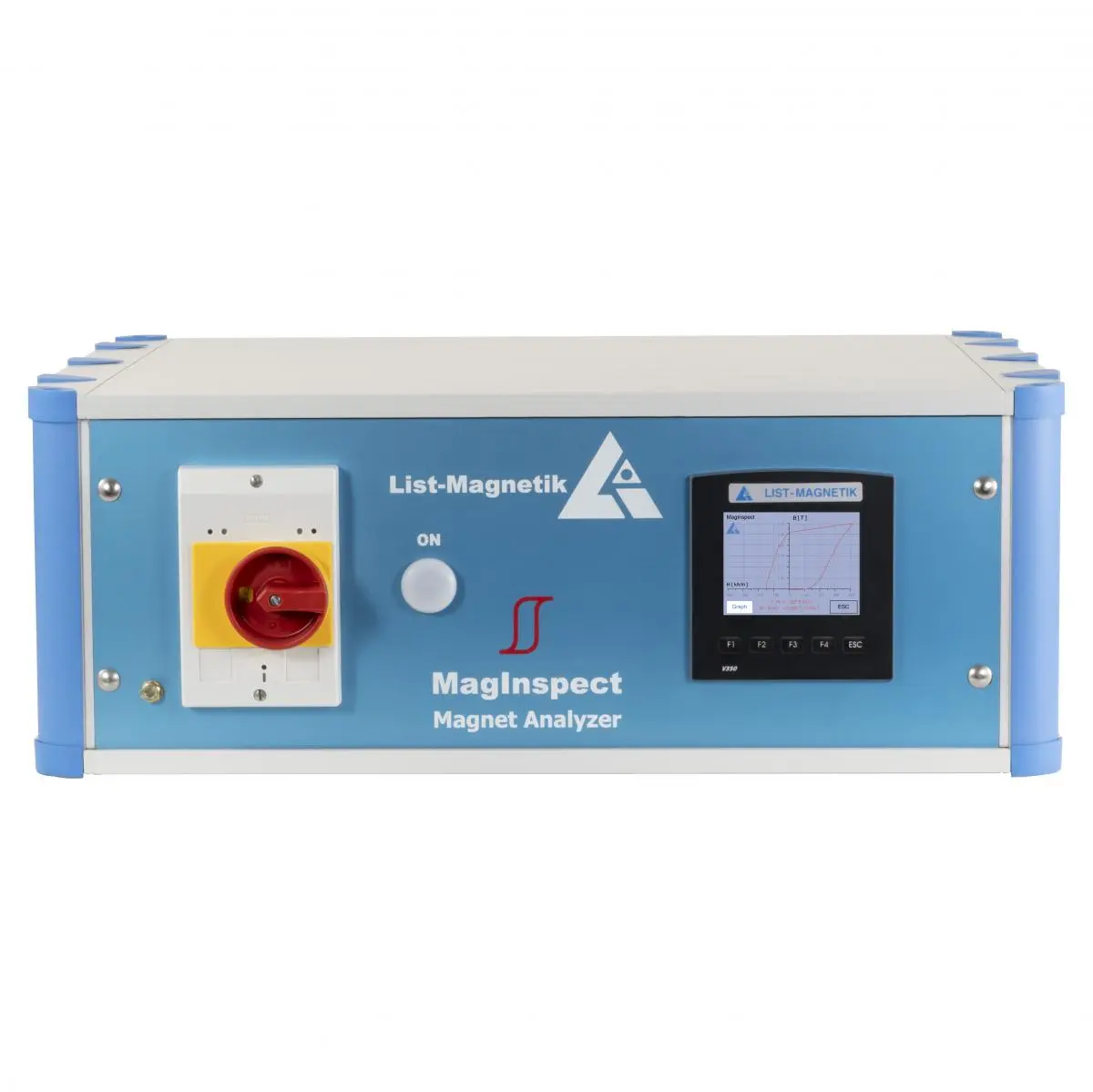
Material Tester (Permagraph), a cost-effective testing device for measuring the hysteresis curve of hard magnetic materials, offers high measurement accuracy and is almost comparable in precision to a Permagraph.
MagInspect is particularly suitable for testing permanent magnetic materials such as AlNiCo, ferrite, SmCo or neodymium magnetic materials. It offers precise measurement of the hysteresis curve and supports material testing and analysis of these specialized magnetic materials.
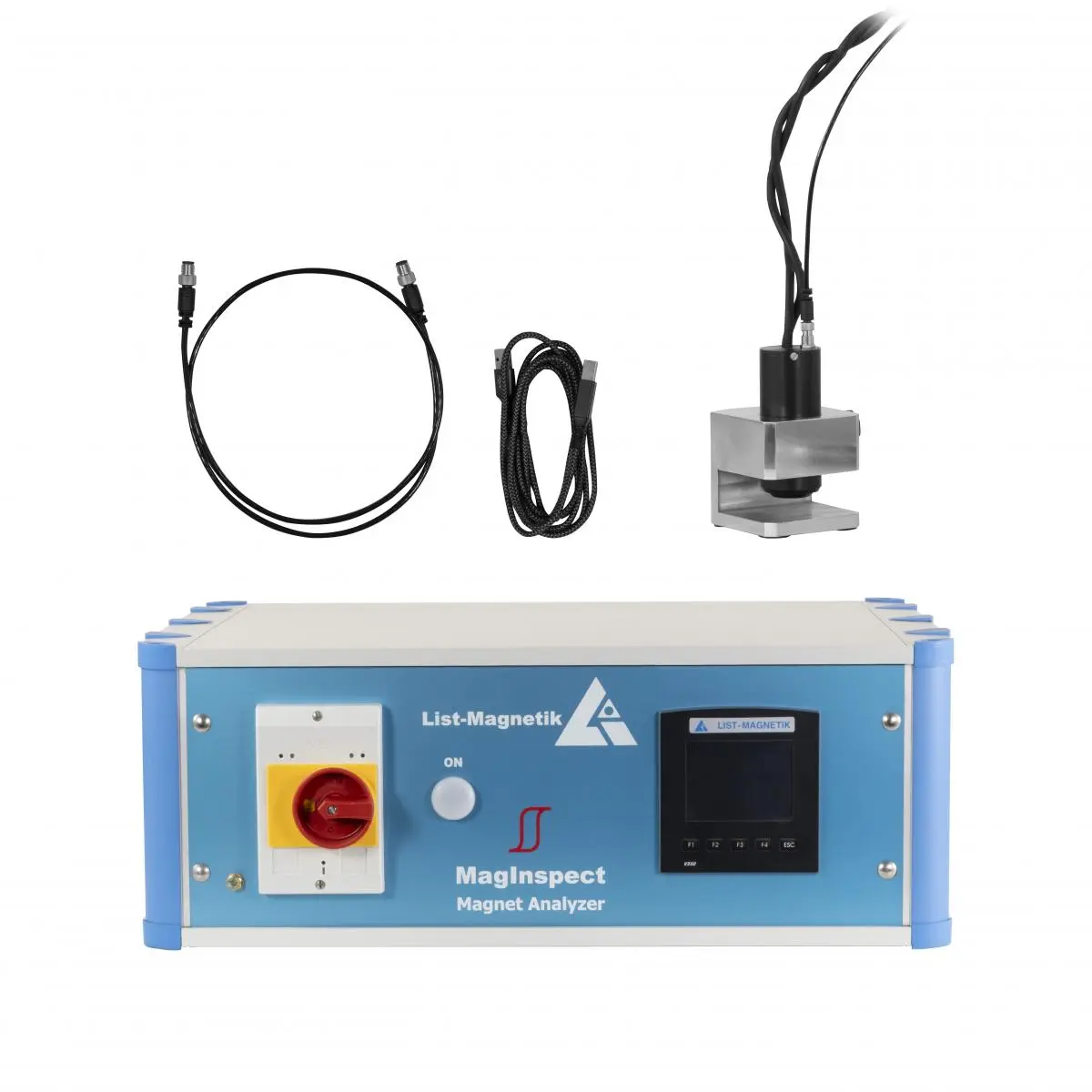
The Material Tester (Permagraph) can replace a Permagraph, which determines the magnetic properties of materials. Furthermore, MagInspect is an affordable and easy-to-use testing device that can record the magnetization and demagnetization curve using a pulse method. The control unit and external pulse measuring probe are equipped with innovative measuring electronics that enable precise and reliable measurement of the magnetization and demagnetization curve. A particular advantage of MagInspect is that the geometry of the object to be measured is largely unrestricted, whereas special magnet geometries are required when measuring with a permagraph.
Typical areas of application for MagInspect are:
- Material testing and quality control
- Determination of the magnetic properties of materials
- Research and development
- Investigation of new materials/alloys for magnetic properties
- Production control
- Monitoring the magnetization of components during manufacture
- Documentation
- Recording the hysteresis curve in magnet production
Measurement parameters with MagInspect:
- Coercive field strength (I_Hc): magnetic field strength required to reduce the magnetization of a material to zero
- Remanence (Br): residual magnetization that remains in a material after the external magnetic field has been removed
- Saturation magnetization (Ms): maximum achievable magnetization of a material
- Hysteresis loop: curve representing the relationship between magnetic field strength and magnetization
The pulse measuring probe is equipped with a built-in Hall probe that features newly developed measuring electronics. With a frequency of up to 10 KHz, it can record the Hall probe's measured values very accurately using a 16-bit A/D converter. At the same time, a magnetization and demagnetization point coil is built in, which generates the magnetization and demagnetization pulses. The control unit generates the individual pulses, while the probe's measuring electronics precisely record the peak magnetic field strength (H value) and the flux value (B value) of the magnetic material.
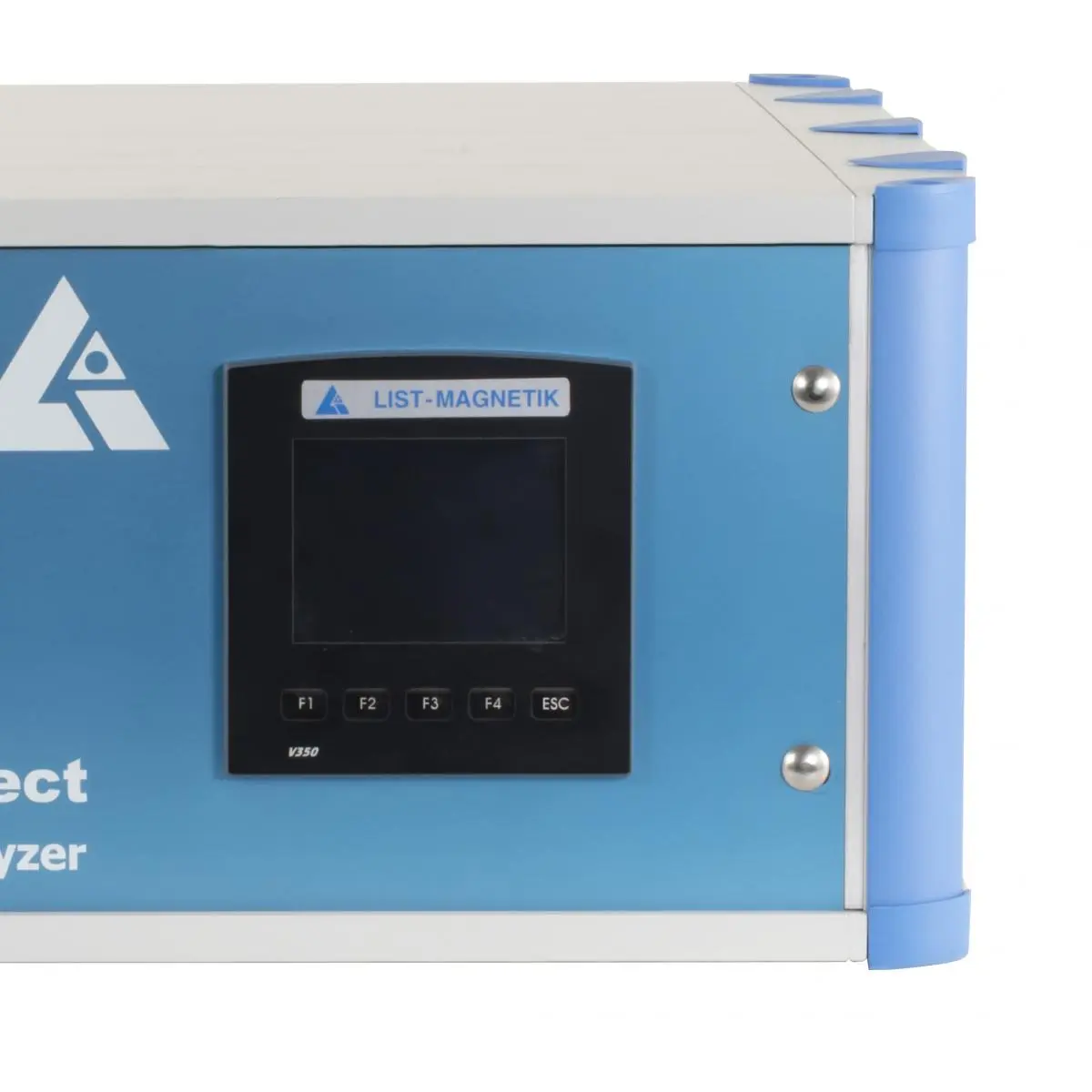
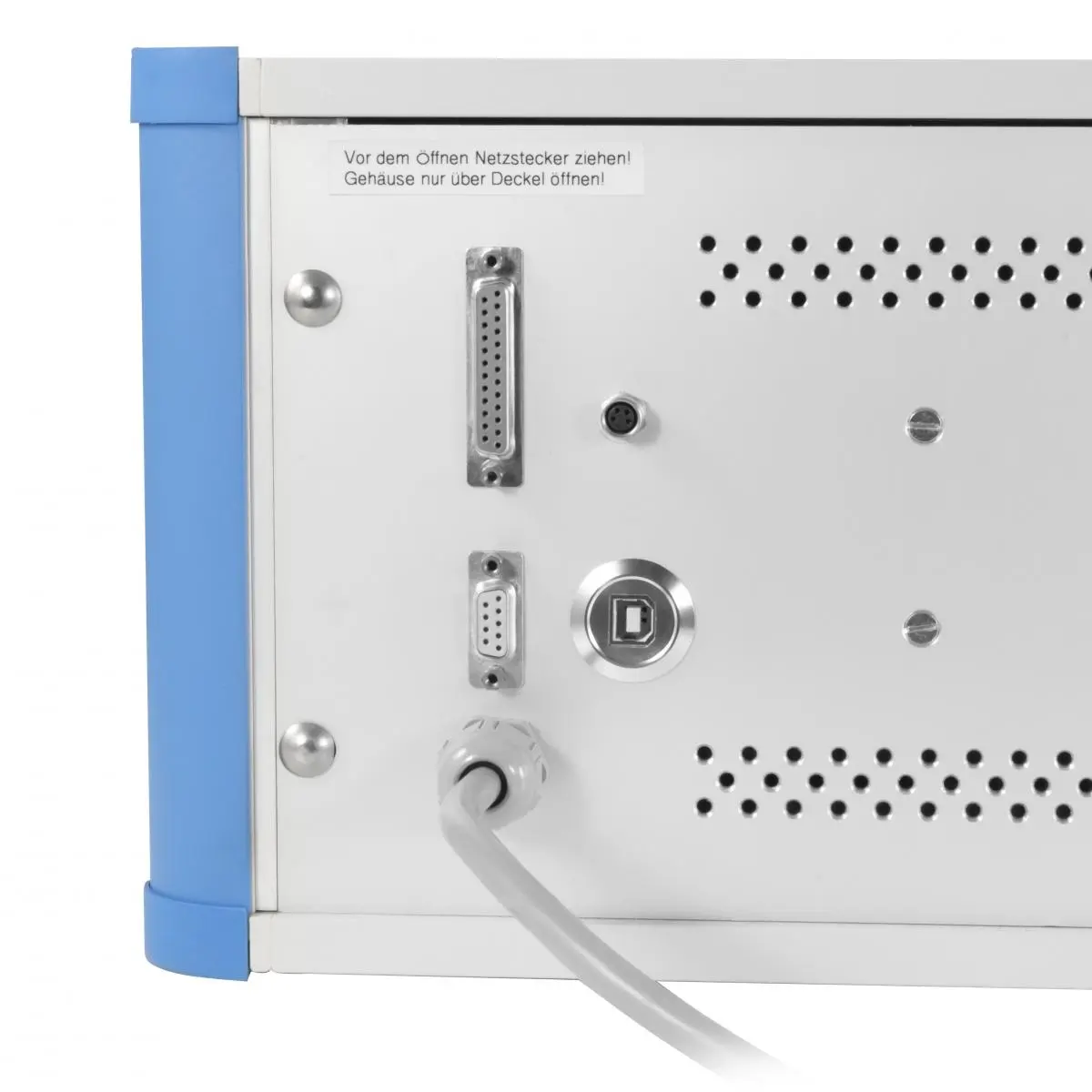
The entire measurement process is automatic, with 10-13 pulses generated for the magnetization and demagnetization processes. The magnetic material can be selected in the control unit in order to use the correct parameters. Based on the individual H and B values, the control unit generates the hysteresis curve in individual steps, which is displayed on the color display. The coercive force IHcI_HcIHc and the remanence BrB_rBr are direct results of the hysteresis curve and provide important information for magnetic material analysis and material testing. At the end of the entire process, the values can be transferred to Microsoft Excel. Microsoft Excel offers the DataStreamer import function, which allows data to be transferred directly from the control unit. A mathematical spline function implemented in an Excel macro calculates and displays a precise hysteresis curve
Quick method for determining the I_Hc and Br values without a hysteresis curve in manual mode:
The Material Tester (Permagraph) also offers a quick method for comparing the Hc values of a material for quality testing in series production. This method enables efficient and precise material testing in production in order to quickly evaluate the magnetic properties of materials and ensure quality.
With the quick method, a magnetization and demagnetization pulse tailored to the magnetic material can be triggered manually. As a result, the I_Hc value (coercive force) and the Br value (remanence) are displayed directly on the control unit.
Advantages of MagInspect over Permagraph The pulse method achieves very high field strengths with the small probe, which are necessary to saturate the material. This high precision enables accurate material testing and analysis of the magnetic properties, especially for small or complex-shaped magnetic materials. No external, complex magnetizing yoke with special pole inserts for different magnet geometries is required. This simplifies material testing and analysis, as the probe directly generates the required magnetization and demagnetization pulses without the need for additional equipment. The pulse method does not require any compensation coils to determine the B value of the magnetic material, as each pulse decays completely and there is no excitation field during the B measurement.
The small pulse measuring probe is largely independent of the geometry of the magnet, so that even external magnets on rotors, for example, can be measured without any problems. The magnet analyzer is also significantly less expensive than a permagraph and offers an efficient solution for magnetic material testing and material analysis.
| Magnetic field strength | |
| Measuring range | 50 ... 1800 kA/m |
| Resolution | 0,1 kA/m |
| Accuracy | ±2% v.Mw. |
| Magnetic flux | |
| Measuring range | 0 ... 2 t |
| Resolution | 0,001 t |
| Accuracy | ±2% v.Mw. |
| General technical data | |
| Dimensions | Probe: d=43 x 105 mm Stand: 80 x 80 x 80 x 80 mm |
| Menu language | German |
| Protection class (device) | IP20 |
| Power supply | 230 V / 50 ... 60 Hz |
| Operating conditions | 0 ... 50 °C , 10 ... 90 % RH |
| Storage conditions | 0 ... 50 °C , 10 ... 90 % RH |
| Dimensions ( L x W x H ) | 550 x 500 x 300 mm |
| Weight | 19000 g |



 [zoom]
 [zoom]
 [zoom]
 [zoom]
 [zoom]
 [zoom]
 [zoom]

