


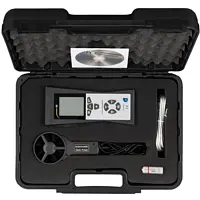
Airflow Meter
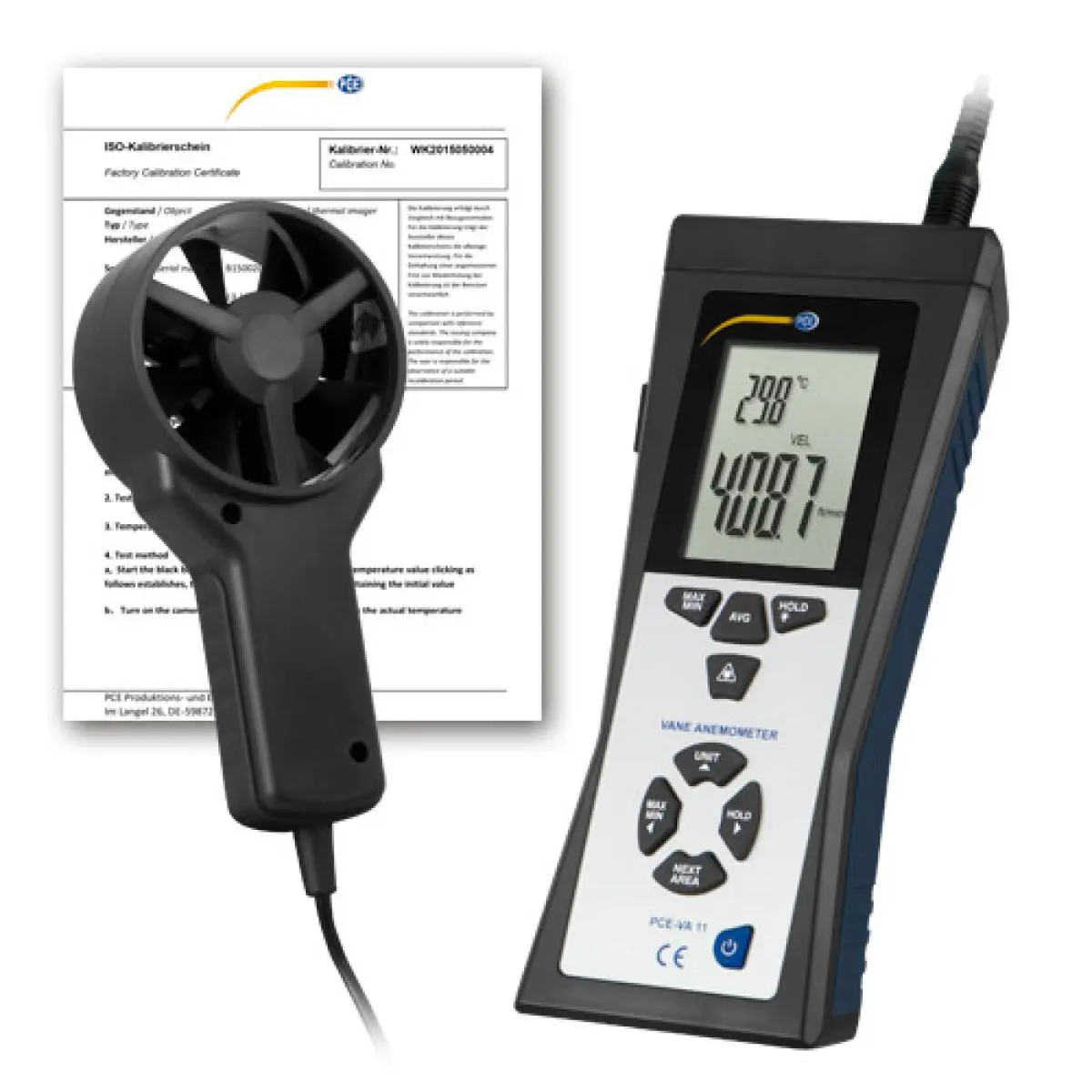
The PCE-VA 11 is an Airflow Meter used to measure air speed, air flow, air temperature and infrared (IR) temperature. This multifunctional portable handheld Airflow Meter offers a quick response time, allowing for real-time measurement. In addition, the impeller features a thread for mounting in one location for fixed measurement.
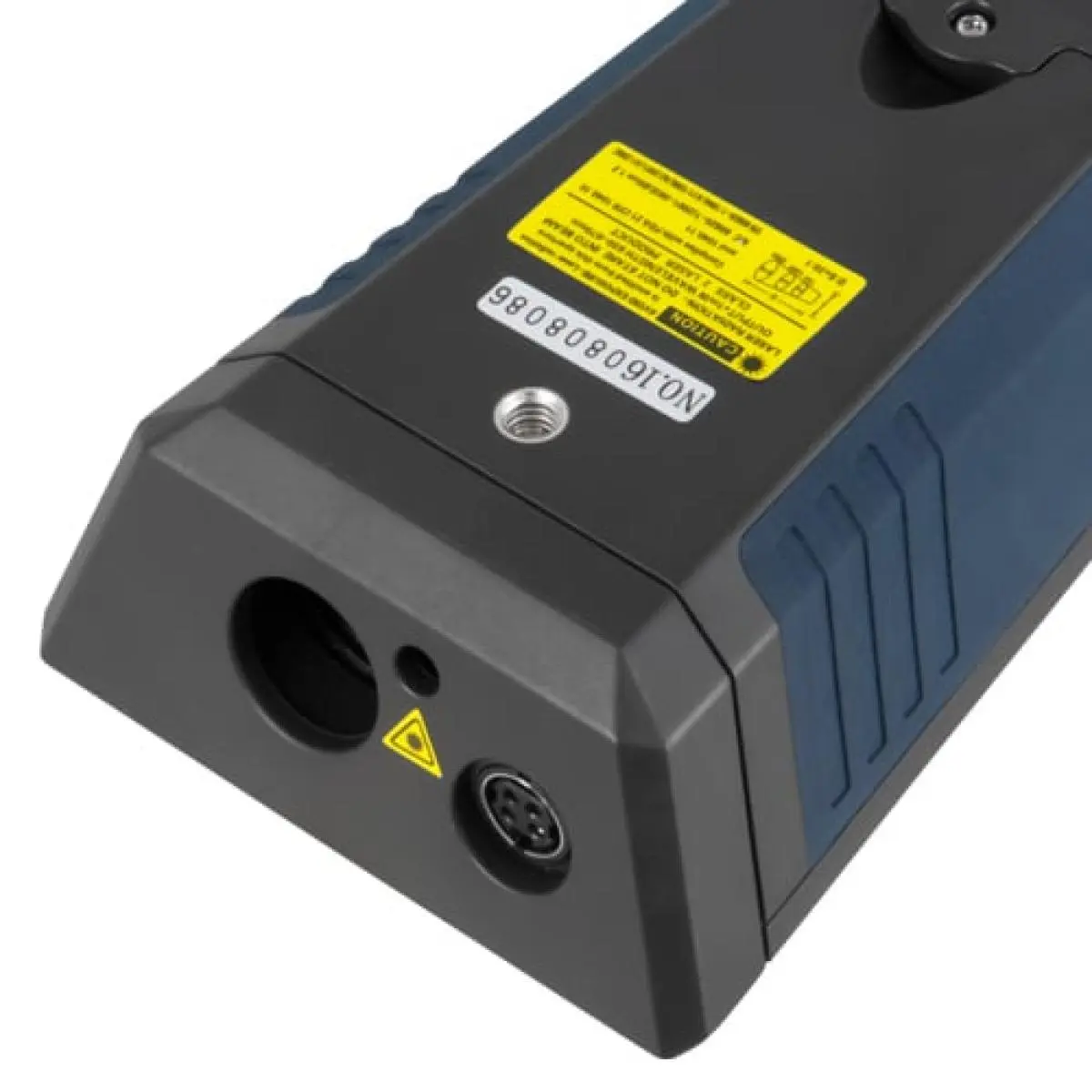
The Airflow Meter's easy-to-read LCD screen is backlit, enabling use in dimly lit areas and low-light conditions. The large display shows air speed (velocity) measurements in m/s, km/h, t/min, knots or mph. Air flow measurements are depicted in CFM or CMM, while air temperature and IR temperature measurements are displayed in °C or °F. A built-in laser light serves as an orientation point for targeted infrared temperature measurement. (Please note that measurement of the ambient air temperature is automatically deactivated when using the laser sighting tool for infrared temperature measurement.) Therefore, the Airflow Meter has many practical applications, including but not limited to the testing, adjusting and balancing of heating, ventilation and air conditioning (HVAC) systems and exhaust fans. Because the impeller is on a 1.2 m (3.93 ft) long cable, measurements can be carried out inside otherwise inaccessible ducts or HVAC system components with the information collected, processed and viewed on the meter or on a PC in real time.
Different anemometer products are designed for different usages. When choosing an anemometer, one should consider the anticipated air speed range (e.g., low flow, mid flow or high flow velocity measurement) and the location where the measurement will take place (e.g., inside an HVAC duct or outdoors in natural wind conditions). An Airflow Meter is suitable for measuring air flow indoors and wind speeds outdoors. Since wind never has a very stable or monotonous flow direction, an Airflow Meter can be adjusted to follow the changing direction of the wind to measure the correct speed. Airflow Meters are characterized by high sensitivity, making them the ideal tools for measuring even the smallest wind speeds. This makes Airflow Meters suitable for monitoring whether drafts occur in schools, offices and healthcare facilities. The same applies to agriculture, since sufficient air conditioning of livestock stalls and stables is important for successful care of the animals. For the measurement of hot air flows, a vane should be thermoresistant. An advantage of this type of anemometer is that it is resistant to contaminants that can gather in ducts and ventilation systems. An Airflow Meter also is a good auxiliary tool during various construction tasks and in mining. The vane itself is reliably protected and thus, the damage risk during operation is low.
The Airflow Meter may also be associated with a weather vane, due to its function to detect the direction of the wind. For some applications, this is a big advantage, and that is why this is one of the points to pay attention to when choosing the right model of the Airflow Meter. The speed of rotation absolutely depends on the wind masses and may be very changeable. This feature is also extremely helpful, since it allows detecting the slightest deviations from the norms, for example, in ventilation systems.
Exactly the slightest deviations often remain overlooked and underestimated. Nevertheless, a sudden failure in the ventilating system or insufficient / excessive circulation of the air masses in the environment may lead to an increase or decrease in temperature, a change in the oxygen concentration in the air, which may be of crucial importance and even devastating. It is not only about providing comfortable working conditions in the office, or a pleasant environment at home, but about safety and even life protection. Application of the Airflow Meter for monitoring and control ensures that people or animals do not end up in dangerous conditions as a result of some fluctuations in weather parameters or failures in the systems. Typical places and activities, like sailing, indoor sporting competitions, underground/subway stations, entertainment activities, movies, theatres, circuses, cattle concentrations in closed stables, pigsties or cowsheds especially for exhibitions, auctions, poultry farms may get dangerous really quickly if the conditions change even slightly. Without auxiliary devices it is sometimes impossible to feel and notice the changes, and if valuable time is lost, this may lead to enormous losses and risks. An Airflow Meter in no time is able to register the current parameters and indicate whether there is some dangerous shift in the common values or not.
ISO Calibration
Thus, the service workers and specialists dealing with all possible types of ventilating systems, in the first place, should pay attention to this small and very light device.
An eternal problem for all who use various measuring instruments is whether to calibrate the device or not. A lot depends on the application purpose. Surely if the Airflow Meter is applied just for some hobby, the requirement of maximum accuracy may be in the background. When it is about serious measurements, involving big facilities, lots of people and big risks (safety and finances), the accuracy and repeatability of the measurements is of paramount importance. The device should perform its measurements in compliance with ISO regulations. Calibrating the Airflow Meter may be a challenging task for the user, since appropriate conditions should be created, like, for example, a wind tunnel, fan, Pitot tube etc. PCE Instruments offers an option of carrying out the calibration on demand for the customers. The calibration certificate with traceable information, confirming the procedure has been carried out in accordance with the standards and requirements, is subsequently provided.
The range of possible applications of anemometers has grown tremendously, that is why, besides the common cup / Airflow Meter, so many other types of this useful device are now present on the market. If you are facing trouble finding the right one for your application, or you are sure about the model of the device, but there are still some doubts about the correctness of applications, you are always welcome to contact the friendly and ready-to-help team of PCE Instruments.
Custom Order
The developers’ department even offers a service of custom-order production. This means that with your help (which implies a clear formulation of your desire), our colleagues are ready to create a one-of-a-kind device, which will be designed and set exactly for your needs.
| Speed | |
| Measuring range | 1,4 ... 108 km/h |
| Resolution | 0.1 km/h |
| Accuracy | ±3% ±0.8 km/h |
| Speed | |
| Measuring range | 0,4 ... 30 m/s |
| Resolution | 0.1 m/s |
| Accuracy | ±3% ±0.2 m/s |
| Speed | |
| Measuring range | 80 ... 5900 ft/min |
| Resolution | 1 ft/min |
| Accuracy | ±3% ±40 ft/min |
| Speed | |
| Measuring range | 0,9 ... 67 mph |
| Resolution | 0.1 mph |
| Accuracy | ±3% ±0.4 MPH |
| Speed | |
| Measuring range | 0,8 ... 58 knots |
| Resolution | 0.1 knots |
| Accuracy | ±3% ±0.4 knots |
| Infrared temperature | |
| Measuring range | -50 ... -20 °C |
| Resolution | 0,1 °C |
| Accuracy | ±5 °C |
| Infrared temperature | |
| Measuring range | -20 ... +500 °C |
| Resolution | 0,1 °C |
| Accuracy | ±2% of measured value / ±2°C |
| Infrared temperature | |
| Measuring range | -58 ... -4 °F |
| Resolution | 0,1 °F |
| Accuracy | ±9.0°F |
| Infrared temperature | |
| Measuring range | -4 ... +932 °F |
| Resolution | 0,1 °F |
| Accuracy | ±2% of measured value or ±4°F |
| Temperature | |
| Measuring range | -10 ... +60 °C |
| Resolution | 0,1 °C |
| Accuracy | ±2 °C |
| Temperature | |
| Measuring range | 14 ... 140 °F |
| Resolution | 0,1 °F |
| Accuracy | ±4.0°F |
| General technical data | |
| Cable length | 1,2 m |
| Measuring functions | MIN, MAX, HOLD, AVG |
| Display type | LCD with backlight |
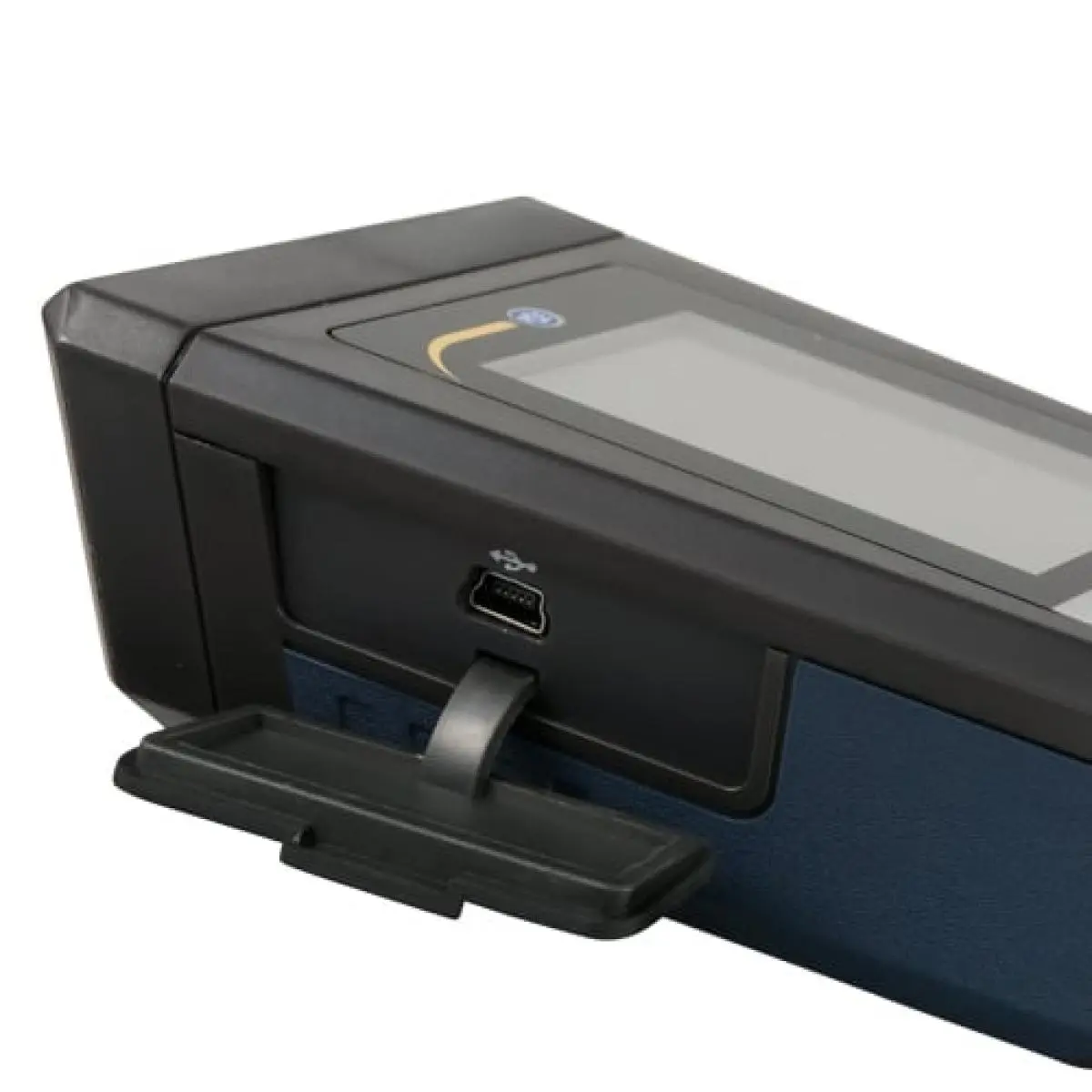
| Interface | Mini-USB |
| Sensor | Vane |
| Automatic power-off | 15 min |
| Dimensions | Impeller: Ø 72 mm |
| Menu language | English, English (GB) |
| Protection class (device) | IP20 |
| Power supply | Battery |
| (Rechargeable) battery | 1 x 9 V 9V block , Alkali-manganese |
| Capacity | 640 mAh |
| Operating conditions | 0 ... 50 °C , 0 ... 80 (non-condensing)% RH |
| Storage conditions | 0 ... 50 °C , 0 ... 80 (non-condensing)% RH |
| Dimensions ( L x W x H ) | 206 x 95 x 45 mm |
| Weight | 313 g |



 [zoom]
 [zoom]
 [zoom]
 [zoom]
 [zoom]
 [zoom]
 [zoom]


