PCE-1000N is a portable handheld Material Tester used to measure the hardness of pure aluminum, soft aluminum, thick aluminum alloy and aluminum sheets, strips, rods, castings and forgings. The hardness of fiber-reinforced (FRP) plastics, glass-reinforced (GRP) plastics, hard plastics and soft metals (such as copper or lead) also can be tested using this battery-powered digital Barcol impressor hardness meter.
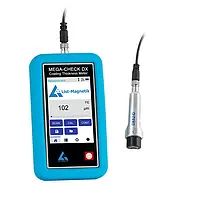
The PCE-TG 300-HT5 is a material thickness meter for measuring wall thickness. In general, the wall thicknesses of all homogeneous materials can be measured with the material thickness meter. Wall thicknesses under a coating can also be measured with the material thickness meter.
The PCE-TG 300-HT5 is a material tester for measuring wall thickness. In general, the wall thicknesses of all homogeneous materials can be measured with the material tester. Wall thicknesses under a coating can also be measured with the material tester.
PCE-950 is a handheld material hardness tester used to determine the hardness of 10 different types of metal (i.e., cast steel, hammered steel, cold-rolled steel, stainless steel, cast iron, ductile iron, aluminum alloy, brass, bronze and forged copper alloy) according to the Leeb rebound method. In addition to Leeb hardness units, the metal hardness tester displays hardness measurements in Rockwell C, Rockwell B, Rockwell A, Brinell, Vickers and Shore hardness units.
The PCE-TG 300-NO2 is a material thickness meter for measuring wall thickness. In general, the wall thicknesses of all homogeneous materials can be measured with the material thickness meter. Wall thicknesses under a coating can also be measured with the material thickness meter.
The PCE-TG 300-NO7 is a material thickness meter for measuring wall thickness. In general, the wall thicknesses of all homogeneous materials can be measured with the material thickness meter. Wall thicknesses under a coating can also be measured with the material thickness meter.
The PCE-TG 300-NO2 is a material tester for measuring wall thickness. In general, the wall thicknesses of all homogeneous materials can be measured with the material tester. Wall thicknesses under a coating can also be measured with the material tester.
The PCE-TG 300-NO7 is a material tester for measuring wall thickness. In general, the wall thicknesses of all homogeneous materials can be measured with the material tester. Wall thicknesses under a coating can also be measured with the material tester.
The PCE-TG 300-NO5 is a material thickness meter for measuring wall thickness. In general, the wall thicknesses of all homogeneous materials can be measured with the material thickness meter. Wall thicknesses under a coating can also be measured with the material thickness meter.
The PCE-TG 300-NO5 is a material tester for measuring wall thickness. In general, the wall thicknesses of all homogeneous materials can be measured with the material tester. Wall thicknesses under a coating can also be measured with the material tester.
The PCE-TG 300-NO5/90 is a material tester for measuring wall thickness. In general, the wall thicknesses of all homogeneous materials can be measured with the material tester. Wall thicknesses under a coating can also be measured with the material tester.
Due to its compact design, the PCE-2550-ICA material tester is easy to use for incoming and outgoing inspections. Due to the adjustable hardness scales, the material tester is very versatile.
The PCE-TG 300-NO5/90 is a material thickness meter for measuring wall thickness. In general, the wall thicknesses of all homogeneous materials can be measured with the material thickness meter. Wall thicknesses under a coating can also be measured with the material thickness meter.
The PCE-TG 300-NO2 is a material thickness meter for measuring wall thickness. In general, the wall thicknesses of all homogeneous materials can be measured with the material thickness meter. Wall thicknesses under a coating can also be measured with the material thickness meter.
The PCE-TG 300-NO2 is a material tester for measuring wall thickness. In general, the wall thicknesses of all homogeneous materials can be measured with the material tester. Wall thicknesses under a coating can also be measured with the material tester.
The PCE-TG 300-NO7 is a material tester for measuring wall thickness. In general, the wall thicknesses of all homogeneous materials can be measured with the material tester. Wall thicknesses under a coating can also be measured with the material tester.
The PCE-TG 300-NO7 is a material thickness meter for measuring wall thickness. In general, the wall thicknesses of all homogeneous materials can be measured with the material thickness meter. Wall thicknesses under a coating can also be measured with the material thickness meter.
The PCE-TG 300-NO5 is a material thickness meter for measuring wall thickness. In general, the wall thicknesses of all homogeneous materials can be measured with the material thickness meter. Wall thicknesses under a coating can also be measured with the material thickness meter.
The PCE-TG 300-NO5 is a material tester for measuring wall thickness. In general, the wall thicknesses of all homogeneous materials can be measured with the material tester. Wall thicknesses under a coating can also be measured with the material tester.
The PCE-TG 300-NO5/90 is a material tester for measuring wall thickness. In general, the wall thicknesses of all homogeneous materials can be measured with the material tester. Wall thicknesses under a coating can also be measured with the material tester.
The PCE-TG 300-NO5/90 is a material thickness meter for measuring wall thickness. In general, the wall thicknesses of all homogeneous materials can be measured with the material thickness meter. Wall thicknesses under a coating can also be measured with the material thickness meter.
An electrostatic measurement is particularly important to check whether surfaces, components or the human body are electrostatically charged. Such electrostatic charges can be detected with the magnetometer.
An electrostatic measurement is particularly important to check whether surfaces, components or the human body are electrostatically charged. Such electrostatic charges can be detected with the environmental meter.
An electrostatic measurement is particularly important to check whether surfaces, components or the human body are electrostatically charged. Such electrostatic charges can be detected with the environmental tester.
An electrostatic measurement is particularly important to check whether surfaces, components or the human body are electrostatically charged. Such electrostatic charges can be detected with the gauss meter.
The PCE-TG 300-NO5/90 is a condition monitoring material thickness meter for measuring wall thickness. In general, the wall thicknesses of all homogeneous materials can be measured with the condition monitoring material thickness meter. Wall thicknesses under a coating can also be measured with the condition monitoring material thickness meter.
An electrostatic measurement is particularly important to check whether surfaces, components or the human body are electrostatically charged. Such electrostatic charges can be detected with the EMF test device.
An electrostatic measurement is particularly important to check whether surfaces, components or the human body are electrostatically charged. Such electrostatic charges can be detected with the electromagnetic radiation detector.
An electrostatic measurement is particularly important to check whether surfaces, components or the human body are electrostatically charged. Such electrostatic charges can be detected with the electromagnetic field (EMF) meter.