£ 1,068.00
Price excl. VAT &. delivery

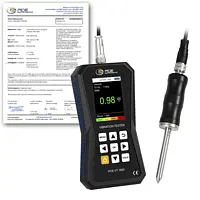
The accelerometer is the ideal companion for checking vibrating parts, machines and systems. With the external vibration sensor on the accelerometer, the vibration displacement up to 3.9 mm, the vibration velocity up to 399.9 mm/s and the vibration acceleration up to 399.9 m/s² can be determined.
Measuring ranges

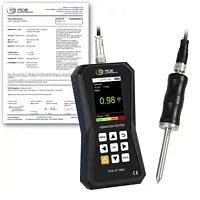
The HVAC meter is the ideal companion for checking vibrating parts, machines and systems. With the external vibration sensor on the HVAC meter, the vibration displacement up to 3.9 mm, the vibration velocity up to 399.9 mm/s and the vibration acceleration up to 399.9 m/s² can be determined.
Measuring ranges
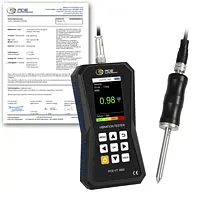
The vibration analyzer is the ideal companion for checking vibrating parts, machines and systems. With the external vibration sensor on the vibration analyzer, the vibration displacement up to 3.9 mm, the vibration velocity up to 399.9 mm/s and the vibration acceleration up to 399.9 m/s² can be determined.
Measuring ranges


The PCE-TG 300-NO5 is an IoT meter for measuring wall thickness. In general, the wall thicknesses of all homogeneous materials can be measured with the IoT meter. Wall thicknesses under a coating can also be measured with the IoT meter.

The PCE-TG 300-NO5 is a material tester for measuring wall thickness. In general, the wall thicknesses of all homogeneous materials can be measured with the material tester. Wall thicknesses under a coating can also be measured with the material tester.

The PCE-TG 300-NO5 is a material thickness meter for measuring wall thickness. In general, the wall thicknesses of all homogeneous materials can be measured with the material thickness meter. Wall thicknesses under a coating can also be measured with the material thickness meter.

The PCE-TG 300-NO5 is an NDT test instrument for measuring wall thickness. In general, the wall thicknesses of all homogeneous materials can be measured with the NDT test instrument. Wall thicknesses under a coating can also be measured with the NDT test instrument.

The PCE-TG 300-NO5 is a paint thickness tester for measuring wall thickness. In general, the wall thicknesses of all homogeneous materials can be measured with the paint thickness tester. Wall thicknesses under a coating can also be measured with the paint thickness tester.

The PCE-TG 300-NO5 is a thickness gauge for measuring wall thickness. In general, the wall thicknesses of all homogeneous materials can be measured with the thickness gauge. Wall thicknesses under a coating can also be measured with the thickness gauge.

The PCE-TG 300-NO5 is a thickness meter for measuring wall thickness. In general, the wall thicknesses of all homogeneous materials can be measured with the thickness meter. Wall thicknesses under a coating can also be measured with the thickness meter.
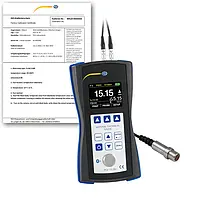

The PCE-TG 300-NO5 is an Ultrasonic testing device for measuring wall thickness. In general, the wall thicknesses of all homogeneous materials can be measured with the Ultrasonic testing device. Wall thicknesses under a coating can also be measured with the Ultrasonic testing device.

The PCE-TG 300-NO5 is an ultrasonic thickness gauge for measuring wall thickness. In general, the wall thicknesses of all homogeneous materials can be measured with the ultrasonic thickness gauge. Wall thicknesses under a coating can also be measured with the ultrasonic thickness gauge.

The PCE-TG 300-NO5 is an ultrasonic thickness tester for measuring wall thickness. In general, the wall thicknesses of all homogeneous materials can be measured with the ultrasonic thickness tester. Wall thicknesses under a coating can also be measured with the ultrasonic thickness tester.

The PCE-TG 300-NO5 is a wall thickness meter for measuring wall thickness. In general, the wall thicknesses of all homogeneous materials can be measured with the wall thickness meter. Wall thicknesses under a coating can also be measured with the wall thickness meter.
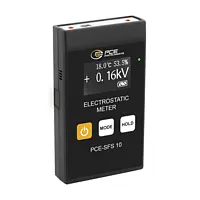
An electrostatic measurement is particularly important to check whether surfaces, components or the human body are electrostatically charged. Such electrostatic charges can be detected with the electromagnetic field (EMF) meter.
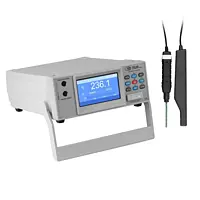
The Electromagnetic Field Meter is used in the laboratory and quality assurance to measure the strength of magnetic fields. The Electromagnetic Field Meter is delivered with two different sensors. A magnetic field sensor is available for general measurements in the Gauss and milli-Tesla range, as well as a precision sensor for measurements in the milli-Gauss and micro-Tesla range.
Tabletop device with 2 sensors
General Probe Range: 0-3000 milli-Tesla (0-30,000 Gauss)
Precision Probe Range: 0-300 micro-Tesla (0-3000 milli-Gauss)
For static and changing magnetic fields
Highly accurate Transverse Hall sensor
Different units selectable (mG / µT)
Data storage on SD memory card
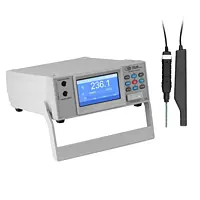
The Electromagnetic Radiation Detector is used in the laboratory and quality assurance to measure the strength of magnetic fields. The Electromagnetic Radiation Detector is delivered with two different sensors. A magnetic field sensor is available for general measurements in the Gauss and milli-Tesla range, as well as a precision sensor for measurements in the milli-Gauss and micro-Tesla range.
Tabletop device with 2 sensors
General Probe Range: 0-3000 milli-Tesla (0-30,000 Gauss)
Precision Probe Range: 0-300 micro-Tesla (0-3000 milli-Gauss)
For static and changing magnetic fields
Highly accurate Transverse Hall sensor
Different units selectable (mG / µT)
Data storage on SD memory card
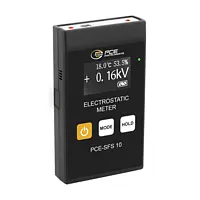
An electrostatic measurement is particularly important to check whether surfaces, components or the human body are electrostatically charged. Such electrostatic charges can be detected with the electromagnetic radiation detector.
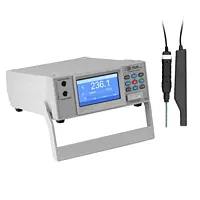
The EMF measuring device is used in the laboratory and quality assurance to measure the strength of magnetic fields. The EMF measuring device is delivered with two different sensors. A magnetic field sensor is available for general measurements in the Gauss and milli-Tesla range, as well as a precision sensor for measurements in the milli-Gauss and micro-Tesla range.
Tabletop device with 2 sensors
General Probe Range: 0-3000 milli-Tesla (0-30,000 Gauss)
Precision Probe Range: 0-300 micro-Tesla (0-3000 milli-Gauss)
For static and changing magnetic fields
Highly accurate Transverse Hall sensor
Different units selectable (mG / µT)
Data storage on SD memory card
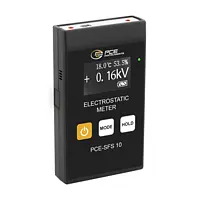
An electrostatic measurement is particularly important to check whether surfaces, components or the human body are electrostatically charged. Such electrostatic charges can be detected with the EMF test device.

An electrostatic measurement is particularly important to check whether surfaces, components or the human body are electrostatically charged. Such electrostatic charges can be detected with the environmental meter.
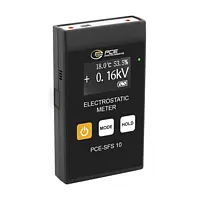
An electrostatic measurement is particularly important to check whether surfaces, components or the human body are electrostatically charged. Such electrostatic charges can be detected with the environmental tester.
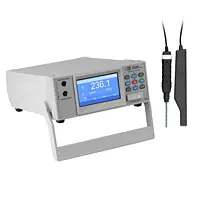
The gauss meter PCE-MFM 4000 is used in the laboratory and quality assurance to measure the strength of magnetic fields. The gauss meter is delivered with two different sensors. A magnetic field sensor is available for general measurements in the Gauss and milli-Tesla range, as well as a precision sensor for measurements in the milli-Gauss and micro-Tesla range.
Tabletop device with 2 sensors
General Probe Range: 0-3000 milli-Tesla (0-30,000 Gauss)
Precision Probe Range: 0-300 micro-Tesla (0-3000 milli-Gauss)
For static and changing magnetic fields
Highly accurate Transverse Hall sensor
Different units selectable (mG / µT)
Data storage on SD memory card
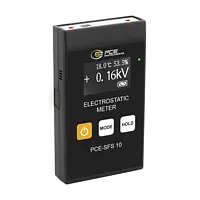
An electrostatic measurement is particularly important to check whether surfaces, components or the human body are electrostatically charged. Such electrostatic charges can be detected with the gauss meter.
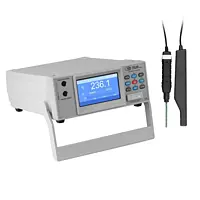
The magnetometer is used in the laboratory and quality assurance to measure the strength of magnetic fields. The magnetometer is delivered with two different sensors. A magnetic field sensor is available for general measurements in the Gauss and milli-Tesla range, as well as a precision sensor for measurements in the milli-Gauss and micro-Tesla range.
Tabletop device with 2 sensors
General Probe Range: 0-3000 milli-Tesla (0-30,000 Gauss)
Precision Probe Range: 0-300 micro-Tesla (0-3000 milli-Gauss)
For static and changing magnetic fields
Highly accurate Transverse Hall sensor
Different units selectable (mG / µT)
Data storage on SD memory card

An electrostatic measurement is particularly important to check whether surfaces, components or the human body are electrostatically charged. Such electrostatic charges can be detected with the magnetometer.

The radiation detector is used in the laboratory and quality assurance to measure the strength of magnetic fields. The radiation detector is delivered with two different sensors. A magnetic field sensor is available for general measurements in the Gauss and milli-Tesla range, as well as a precision sensor for measurements in the milli-Gauss and micro-Tesla range.
Tabletop device with 2 sensors
General Probe Range: 0-3000 milli-Tesla (0-30,000 Gauss)
Precision Probe Range: 0-300 micro-Tesla (0-3000 milli-Gauss)
For static and changing magnetic fields
Highly accurate Transverse Hall sensor
Different units selectable (mG / µT)
Data storage on SD memory card

The radioactivity meter is used in the laboratory and quality assurance to measure the strength of magnetic fields. The radioactivity meter is delivered with two different sensors. A magnetic field sensor is available for general measurements in the Gauss and milli-Tesla range, as well as a precision sensor for measurements in the milli-Gauss and micro-Tesla range.
Tabletop device with 2 sensors
General Probe Range: 0-3000 milli-Tesla (0-30,000 Gauss)
Precision Probe Range: 0-300 micro-Tesla (0-3000 milli-Gauss)
For static and changing magnetic fields
Highly accurate Transverse Hall sensor
Different units selectable (mG / µT)
Data storage on SD memory card