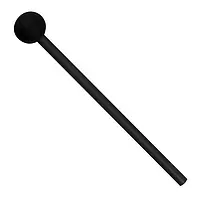
Belt tension meter
Pre-tension meter for quick and accurate measurement of belt tension
Memory for 750 readings / graphic display / easy to use / measurement in Hz and N
Drive belts are indispensable in industry and mechanical engineering. The maximum service life of a drive belt depends on optimum belt tension. A motor failure caused by belt damage can result in significant costs. To prevent damage to both the motor and the belt, regular checks of belt tension are therefore essential. The belt tension of drive belts can be measured quickly and reliably using the digital belt tension gauge. This tension gauge is designed for particularly effective inspection of belt systems via frequency measurement.
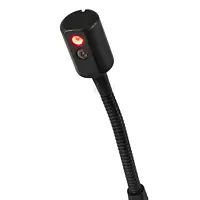
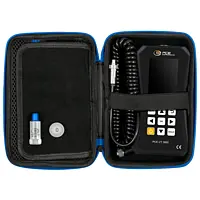
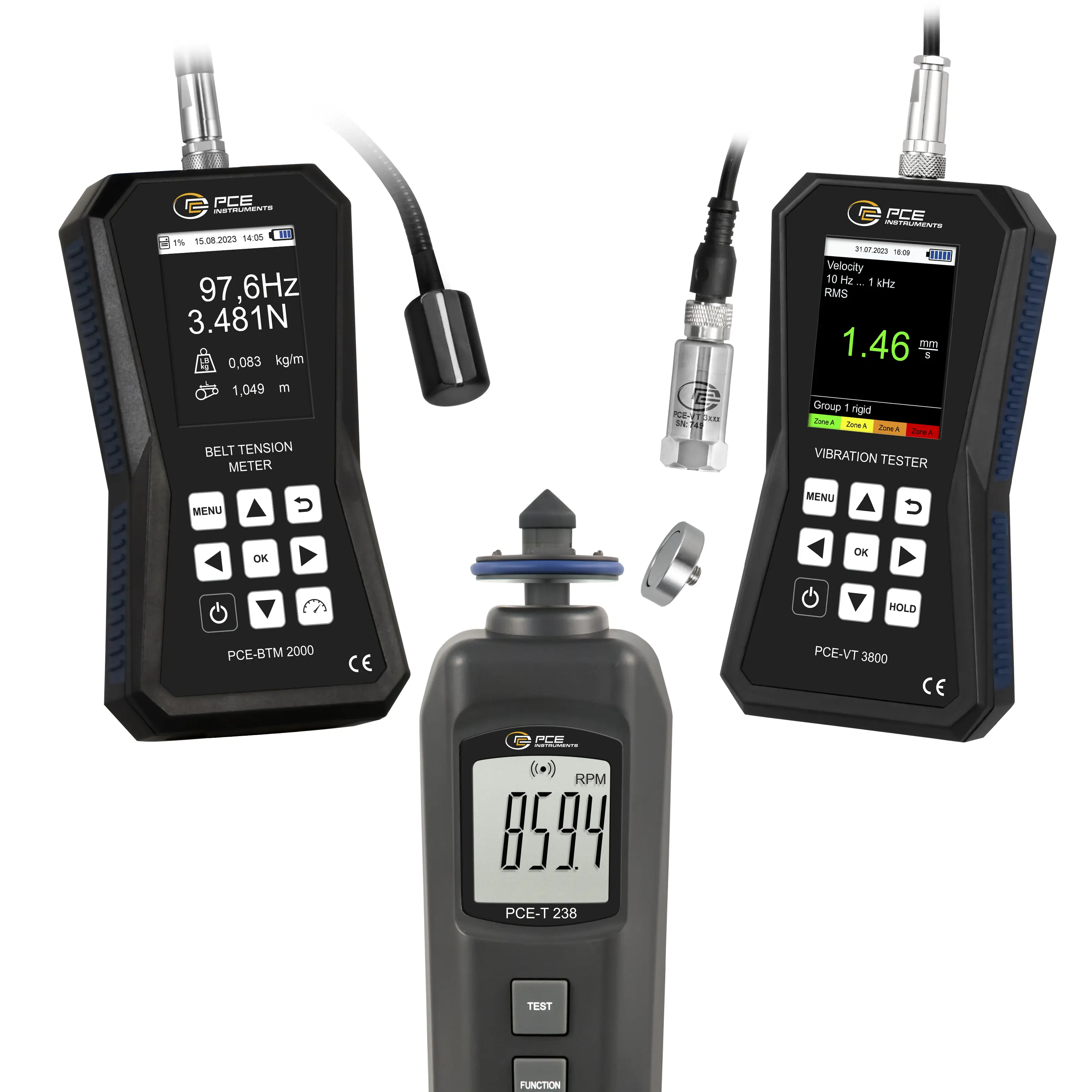
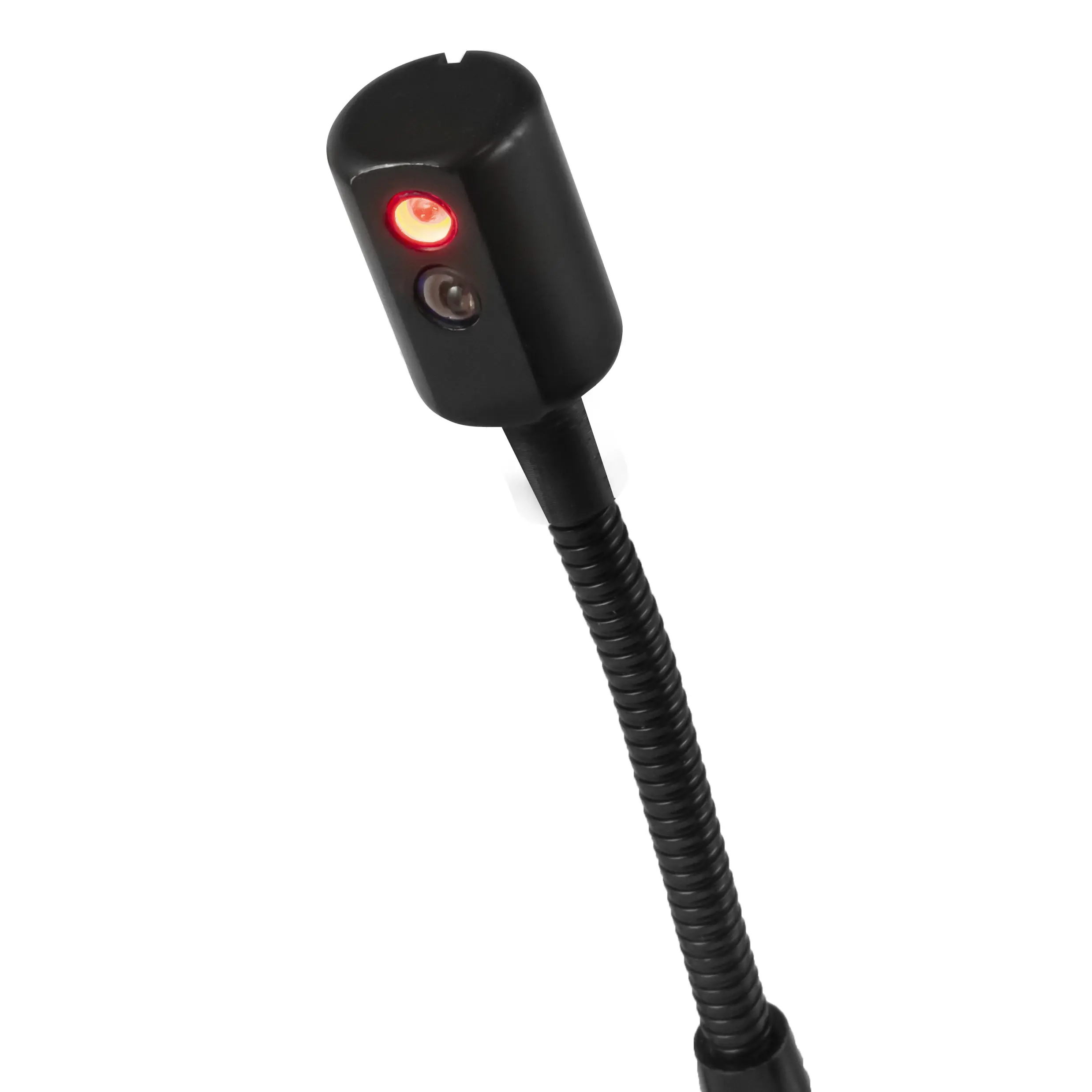
The belt tension gauge is an optical maintenance tool for determining belt tension. This tension gauge consists of a display unit and a sensor head. The sensor head of the belt tension meter is mounted on a gooseneck. Thanks to the flexible gooseneck, the sensor head can be positioned as required, allowing the belt tension of drive belts to be measured even in hard-to-reach areas.
The belt tension meter measures the tension and the frequency of the belt whilst it is stationary. A small impulse applied to the belt is sufficient to set it vibrating. Thanks to its sensor, the belt tension meter detects the natural frequency of the belt generated in this way and displays it on the large, backlit display. Based on the belt frequency and the optional input of belt length and mass, the tension meter can directly determine the tension of the belt. Using the belt tension meter, the user can determine the belt tension in the pulley system to be controlled and take immediate action to adjust the tension to the setpoint. Measuring belt tension requires a high degree of precision; the tension meter carries out this measurement quickly and reliably.
When using the belt tension meter, the user can choose between two units of measurement: N (SI unit) and pound-force (US unit). The belt tension meter’s graphic display shows the measured value as belt frequency in Hz. When the belt mass and length are entered, the belt tension meter also displays the tension force in Newtons. The intuitive graphic menu is shown on the belt tension meter’s high-contrast display in a choice of six languages. For further analysis and for quality assurance purposes, the belt tension meter is equipped with a memory. Up to 750 data records can be stored in the belt tension meter’s memory, organised into 15 folders, each containing 50 measured values. In this way, the data is not lost after a real-time measurement and can be saved in the belt tension meter for future measurements.
Areas of application for belt tension gauges
The belt tension gauge has a wide range of applications. For example, they can be used to test large motor-shaft combinations, conveyor systems, hoists, lifts, equipment in the automotive industry or agricultural machinery.
Measuring belt tension is always necessary when machines and systems are to be maintained to the highest standard. The belt tension meter from PCE Instruments can be used to determine the tension of both toothed belts and V-belts. Belt tension is a key parameter during the installation, set-up, maintenance and repair of belt drives. Therefore, belt tension should be checked regularly throughout the entire service life using the compact belt tension meter and adjusted as necessary. Only by using the belt tension meter can the maximum service life of all machine components be guaranteed. Both excessive and insufficient belt tension can lead to damage. Regular checks can significantly reduce follow-on costs resulting from unplanned downtime caused by bearing damage or defective belts. The use of a belt tension gauge is therefore suitable for applications in the fields of motor technology, industrial production, stepper motors, tool and machine construction, and also in the maintenance and repair sector. To ensure a long service life and high performance of equipment, machines and systems, it is important to measure the tension of drive belts regularly.
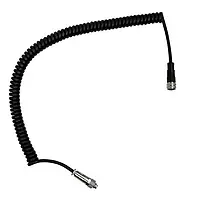
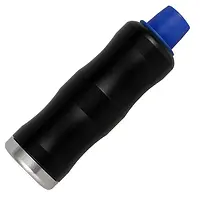
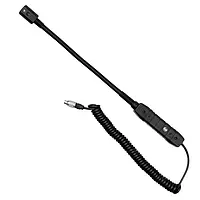
In addition to the belt tension meter, PCE Instruments offers the gooseneck sensor PCE-BTM 2000 SHL. To reach even hard-to-access measurement points in installed systems, the sensor features a long gooseneck and a coiled cable.
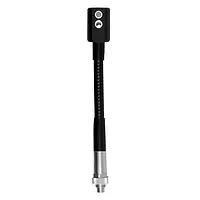
The replacement sensor with a short gooseneck, the PCE-BTM 2000 SHS, can be easily screwed onto the PCE-BTM 2000 measuring instrument. The flexible sensor neck allows even hard-to-reach measurement points to be accessed.
What is belt preload force / preload?
As several forces act on a belt drive, the most important forces acting on belt drives are listed below to help understand the significance of the preload. The belt connects a drive pulley to a driven pulley. The drive pulley is driven by a motor which generates torque and transmits this to the drive pulley. The belt transfers this torque to the driven pulley in the form of a circumferential force. The following forces are important in this context.
The circumferential force: The circumferential force corresponds to the useful force to be transmitted by the belt. The circumferential force depends on the motor power applied – and thus on the torque – as well as on the motor speed and the pulley diameter. To maintain the balance of forces, the circumferential force causes different forces to develop in the strands of the belt. The difference in forces between the loaded strand and the unloaded strand corresponds to the circumferential force transmitted to the driven belt.
Frictional force: At the drive pulley, the frictional force ensures that the motor’s torque is transmitted via the belt to the driven pulley. A usable torque is generated at the driven pulley, which corresponds to the product of the circumferential force and half the diameter of the driven pulley.
Centrifugal force. Centrifugal force increases as the rotational speed rises and causes the belt to stretch, thereby reducing its grip. In this case, the centrifugal force acts in opposition to the adhesive force.
Pre-tension: Under dynamic conditions, the pre-tension differs between the load and no-load runs. In a static state, the pre-tension is identical in both runs. In a static state, the pre-tension must be adjusted using a pre-tension measuring device so that, under dynamic conditions, there is sufficient grip on the pulleys to ensure power transmission from the belt to the pulley, whilst taking into account the centrifugal forces acting on the belt during operation. However, the pre-tension must not be set too high, as this may otherwise lead to belt damage and/or bearing damage under load. The correct pre-tension must be selected specifically for each belt and its particular application. In most cases, belt manufacturers specify the appropriate pre-tension in terms of forces or frequencies. A pre-tension measuring device can then be used to precisely determine the required pre-tension after installation and before commissioning a belt drive.
Acceleration transducer
for vibrations with external sensor
Peak value measurement for machinery and plant / optionally with ISO factory certification / software /
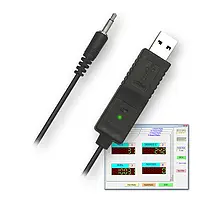
various menu languages / PC connection via micro-USB / internal memory /
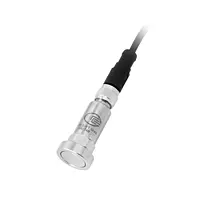
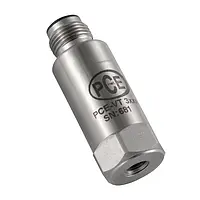
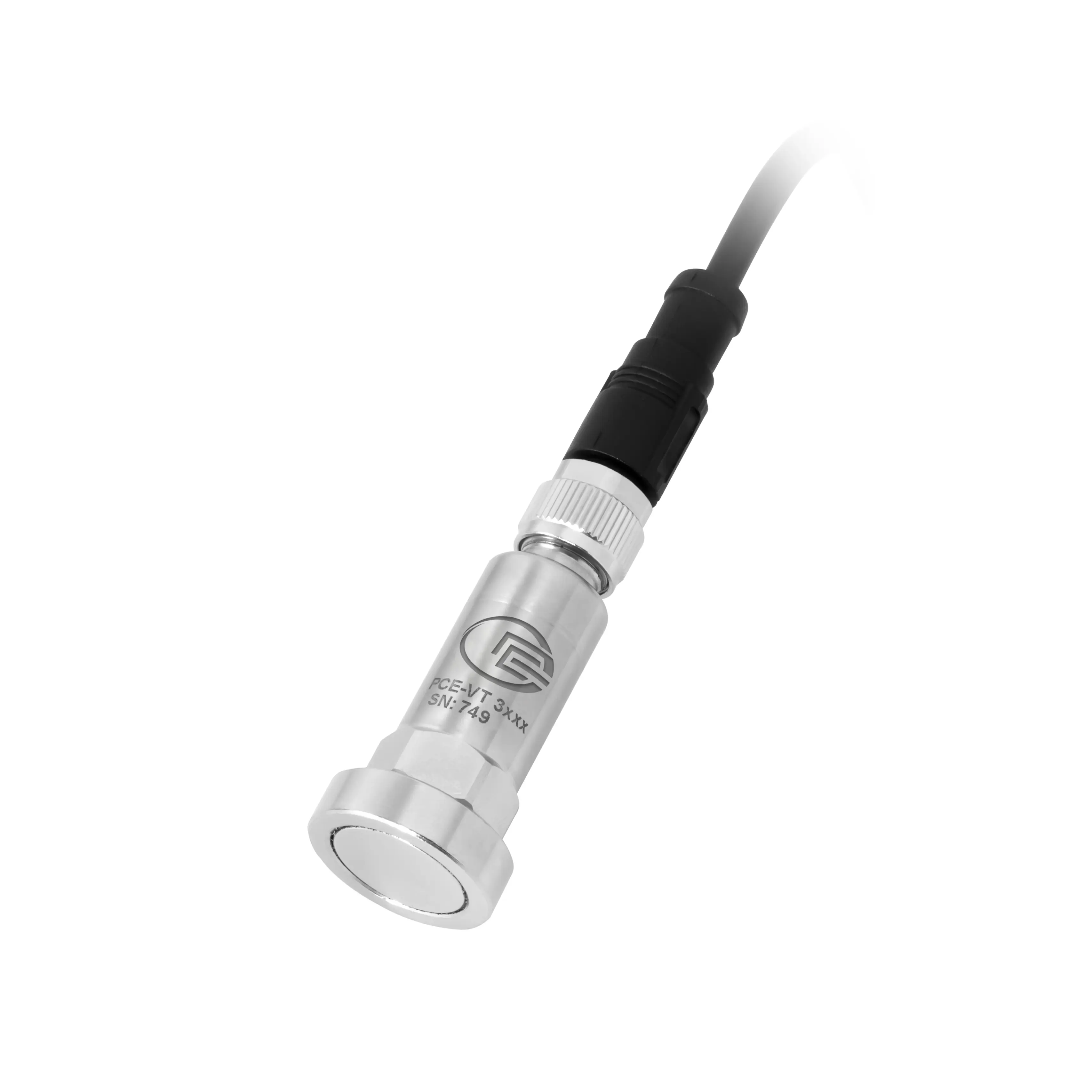
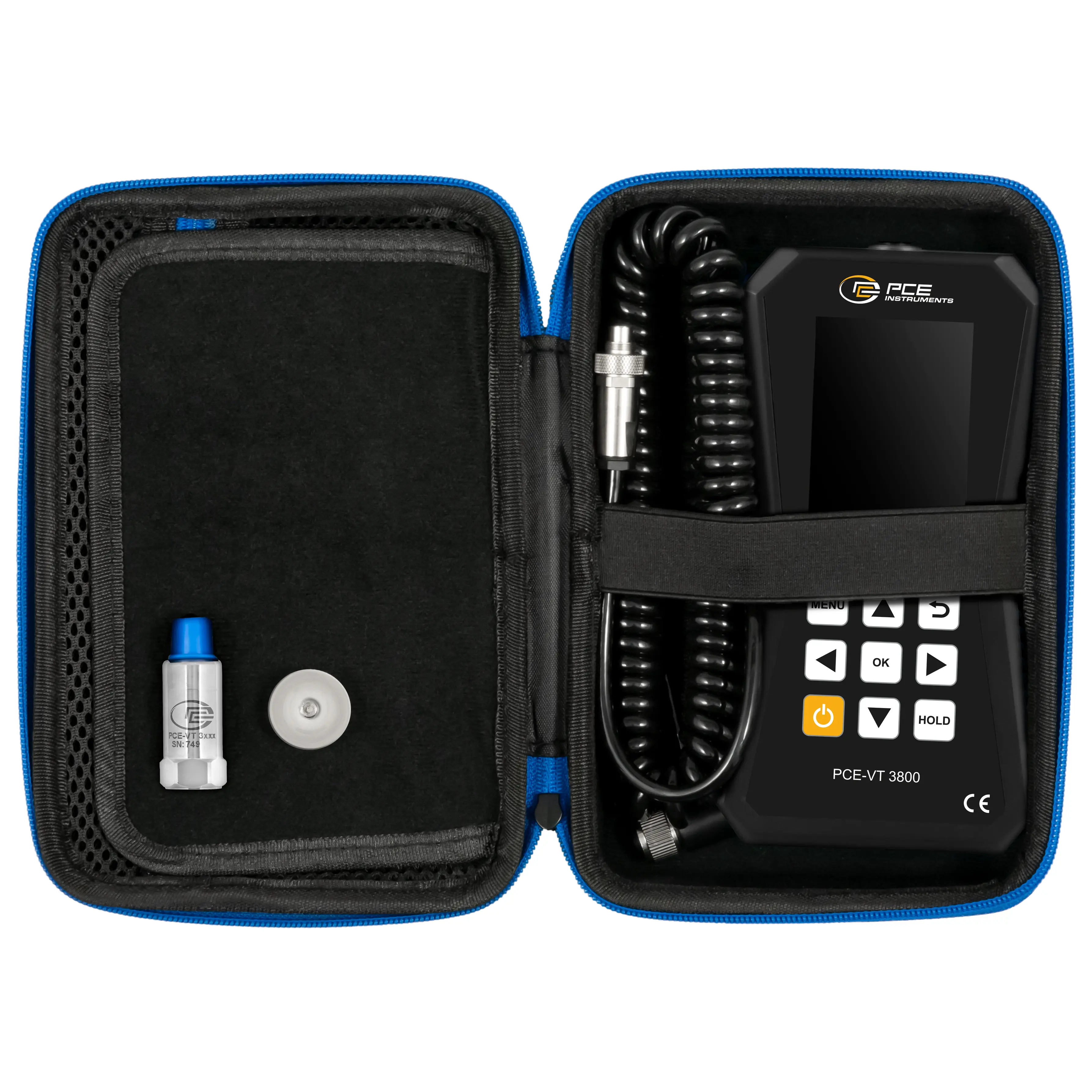
The vibration accelerometer is the ideal tool for inspecting vibrating parts, machines and plant. Using the external vibration sensor on the accelerometer, the vibration displacement can be measured up to 3.9 mm, the vibration velocity up to 399.9 mm/s and the vibration acceleration up to 399.9 m/s². The measurement parameters available on the accelerometer are RMS, peak, peak-to-peak and crest factor. Another function of the accelerometer is automatic evaluation in accordance with ISO 10816-3. This enables the accelerometer to determine the current vibration condition of a machine using a pass/fail assessment. As a result, the accelerometer is used, for example, during repair and maintenance work on machinery. The built-in LiPo battery, with a capacity of 2500 mAh, enables a battery life of up to 20 hours. The LiPo battery can be recharged via the micro-USB port on the accelerometer.
To process the measured values further, they can be saved directly onto the accelerometer. An internal memory is available for this purpose. The measured values can be saved either manually or automatically by the accelerometer. After a measurement, the recorded data can be read out via a PC. Using the accelerometer software, the measurement data can then be analysed using graphical representations and tabular lists. The measurement data can be exported as a CSV file for further processing. If a firmware update is available for the accelerometer, this can also be carried out directly via the software.
Rev counter for contact and non-contact measurement
Verification of surface velocities is also possible /
for speeds up to 99,999 rpm / battery-operated / independent of the direction of rotation
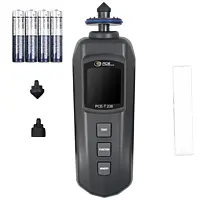
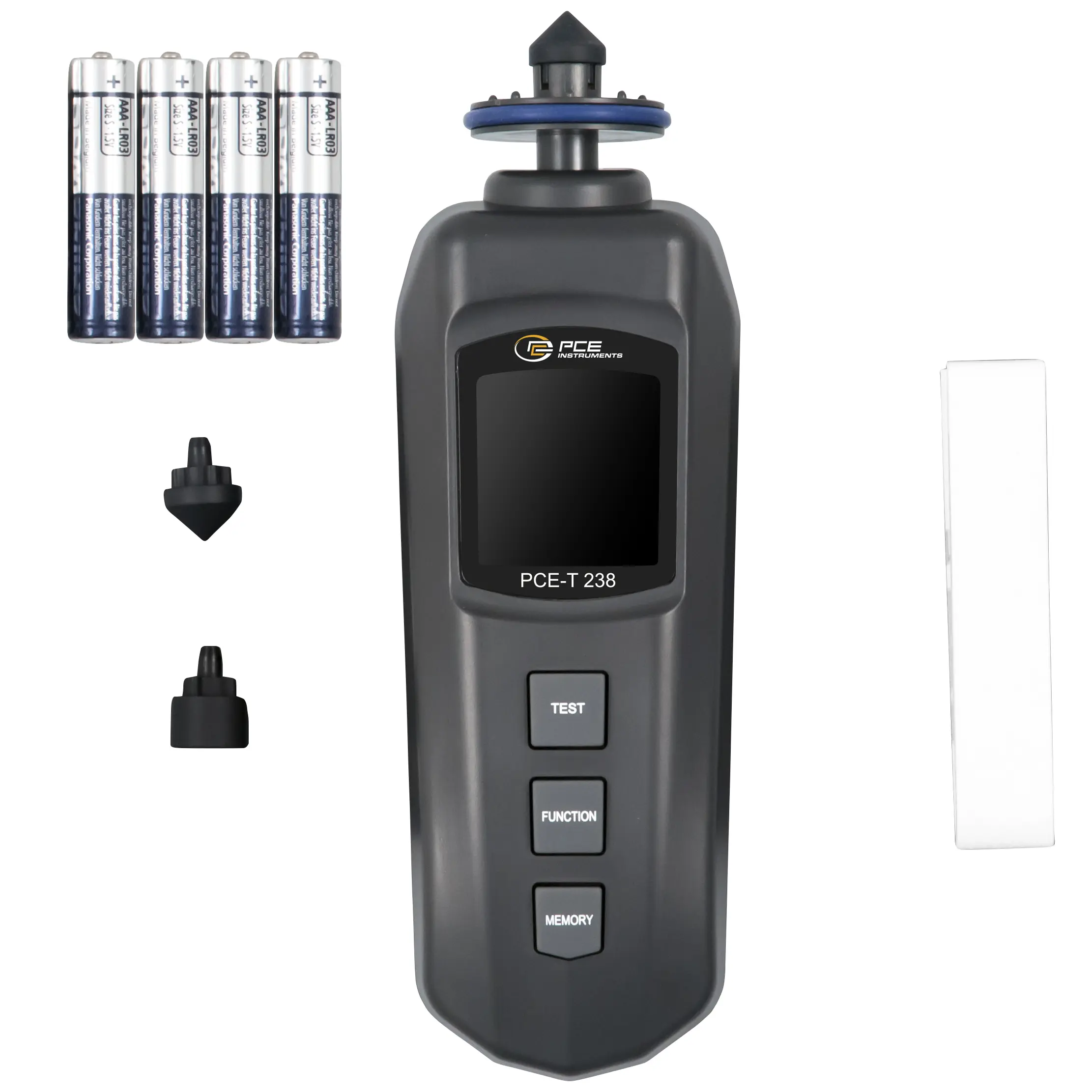
The rev counter is a battery-operated handheld measuring device designed for mobile use. It can perform both contact and non-contact measurements. It is also possible to measure surface speed. The rev counter can measure speeds of up to 99,999 revolutions per minute. This measurement range is achievable for non-contact measurements using the optical tachometer. For contact measurements, values up to 19,999 revolutions per minute can be determined, whilst surface speed measurement allows speeds of up to 1,999.9 metres per minute to be measured. Such measurements can be started immediately using the tachometer and require no extensive preparation.
When using the tachometer, the user does not need to pay attention to the direction of rotation, as this device operates independently of it and can be used regardless. It is therefore particularly suitable for use in the maintenance and servicing of machinery. The non-contact measurement also allows the rotational speed to be checked on components that are difficult to access.


 [zoom]
 [zoom]
 [zoom]
 [zoom]
 [zoom]
 [zoom]
 [zoom]
 [zoom]
 [zoom]
 [zoom]