 [zoom]
 [zoom]
 [zoom]
 [zoom]
 [zoom]
 [zoom]
 [zoom]
 [zoom]
 [zoom]

AED 1,357.00
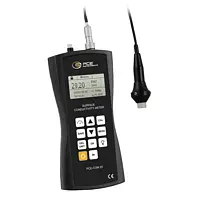
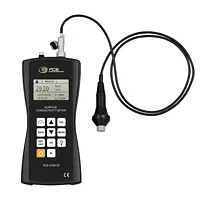

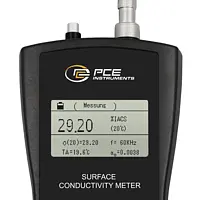


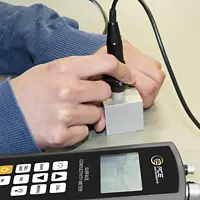

Large measuring range up to 112% IACS or 65 MS/m with lift-off and temperature compensation, memory, PC-compatible software, 60 kHz operating frequency
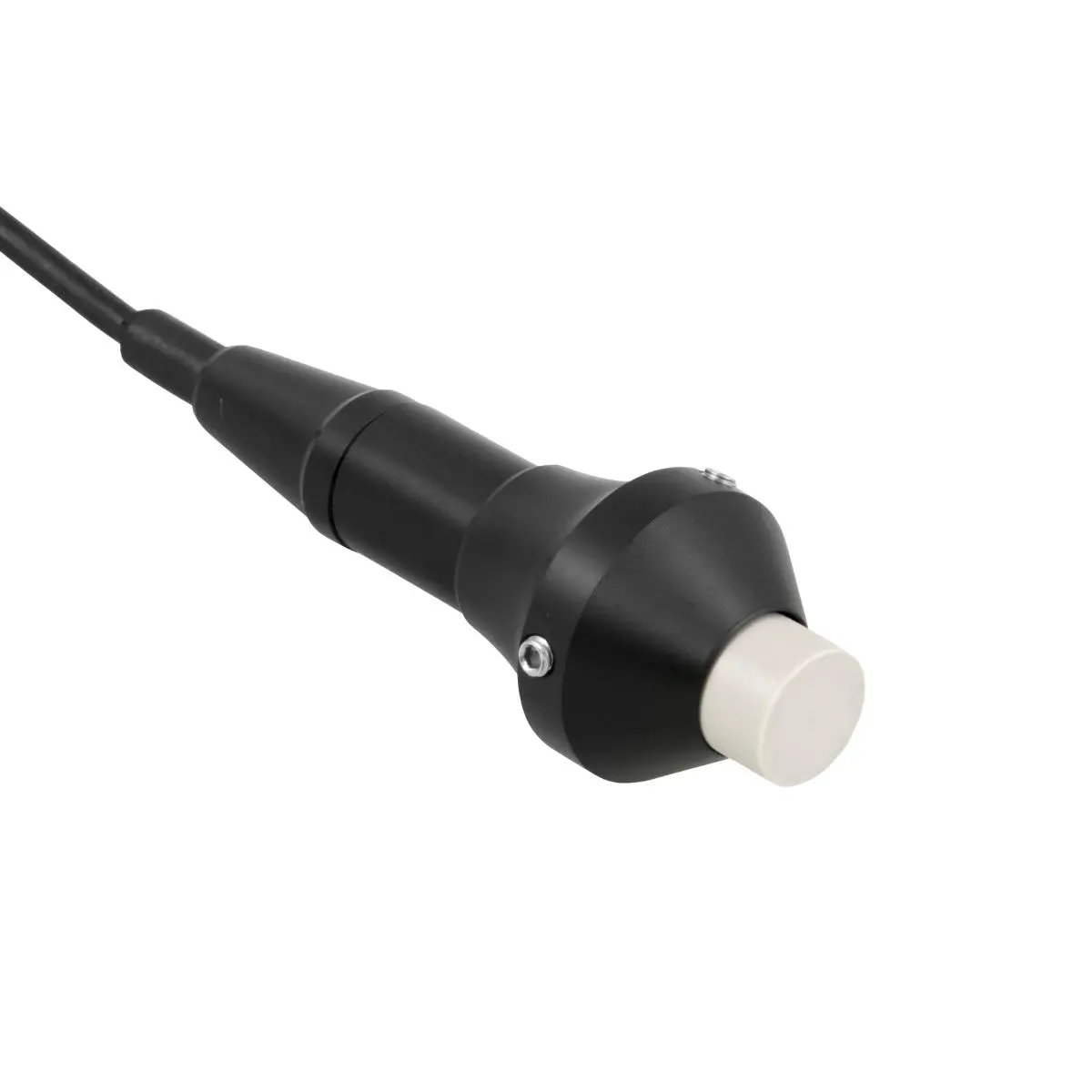
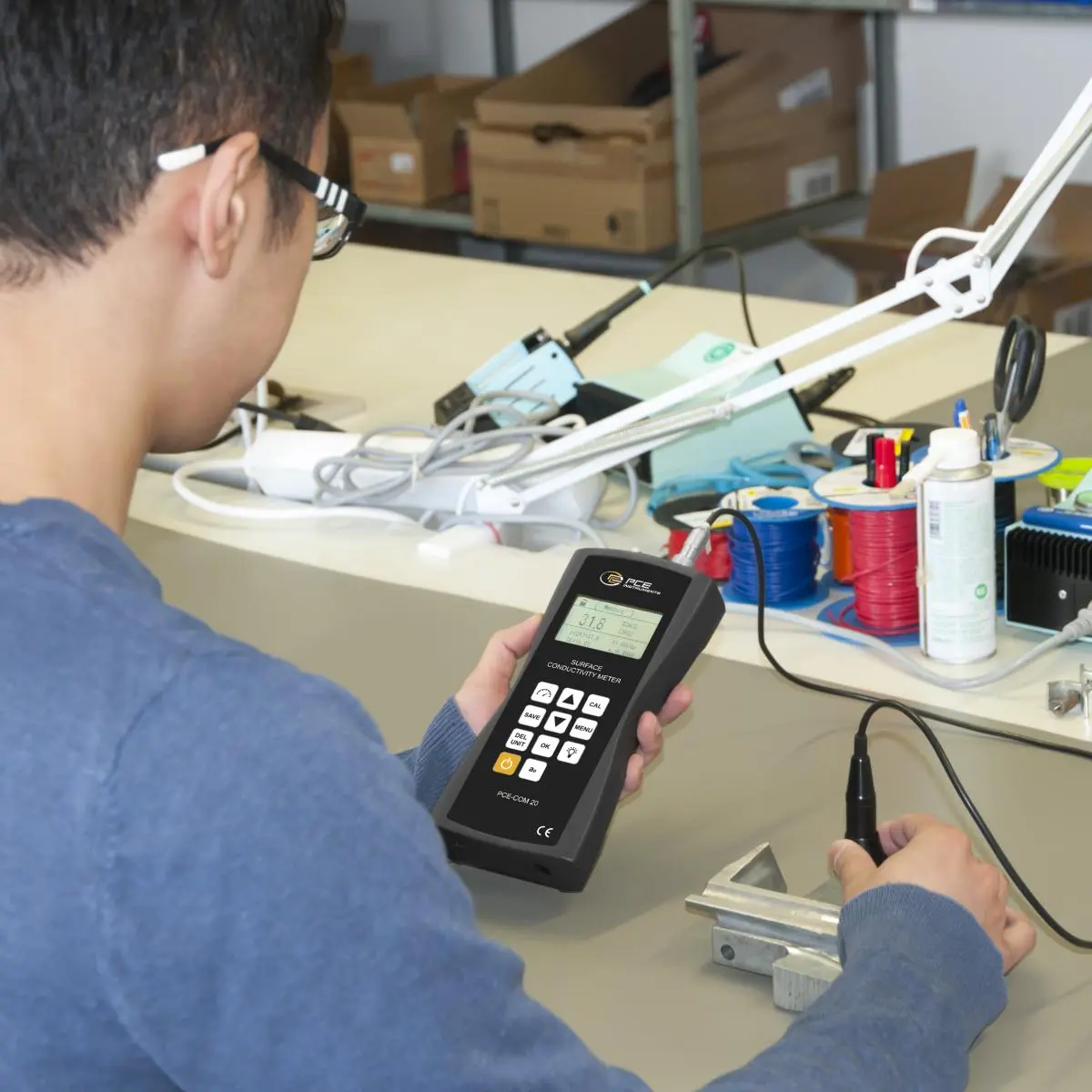
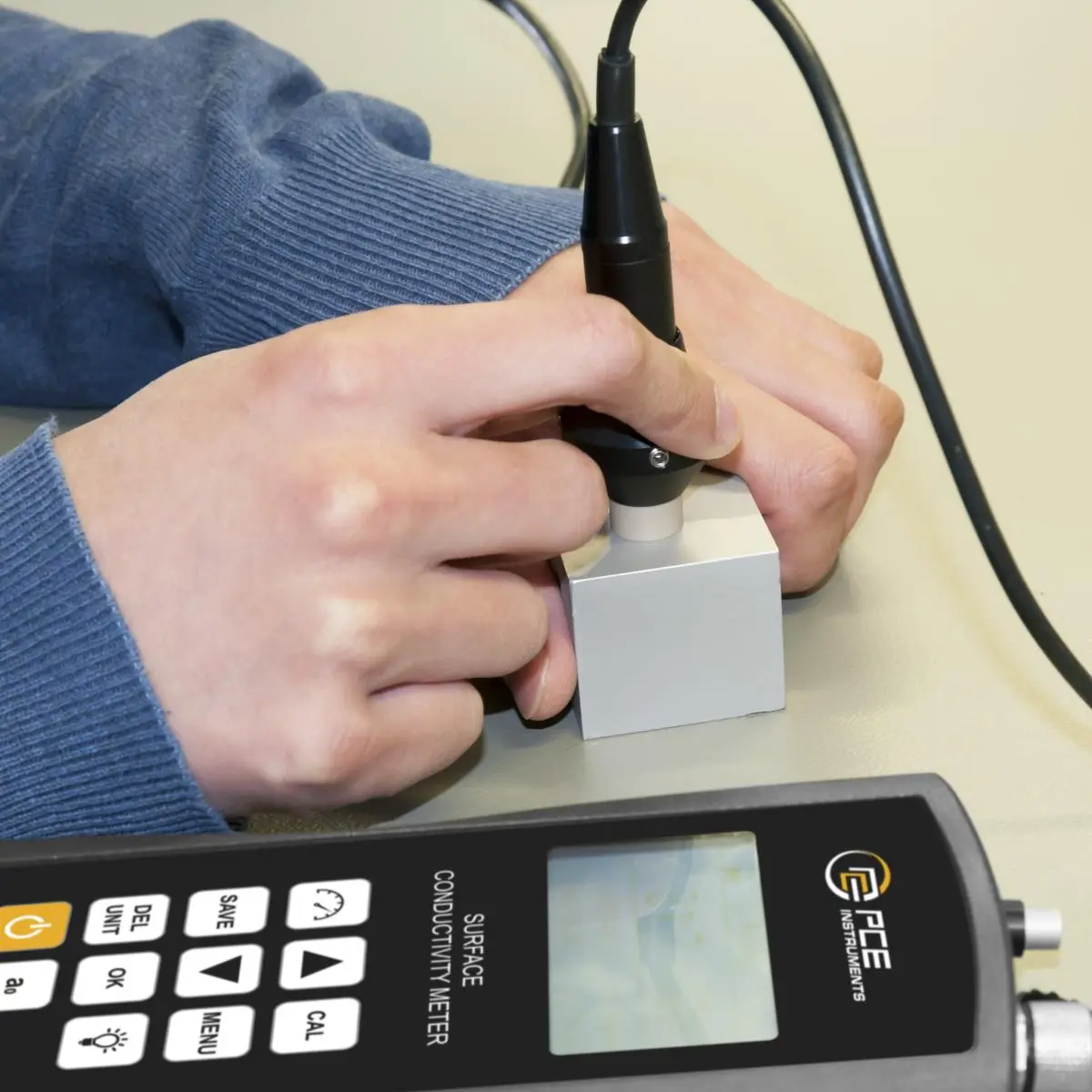
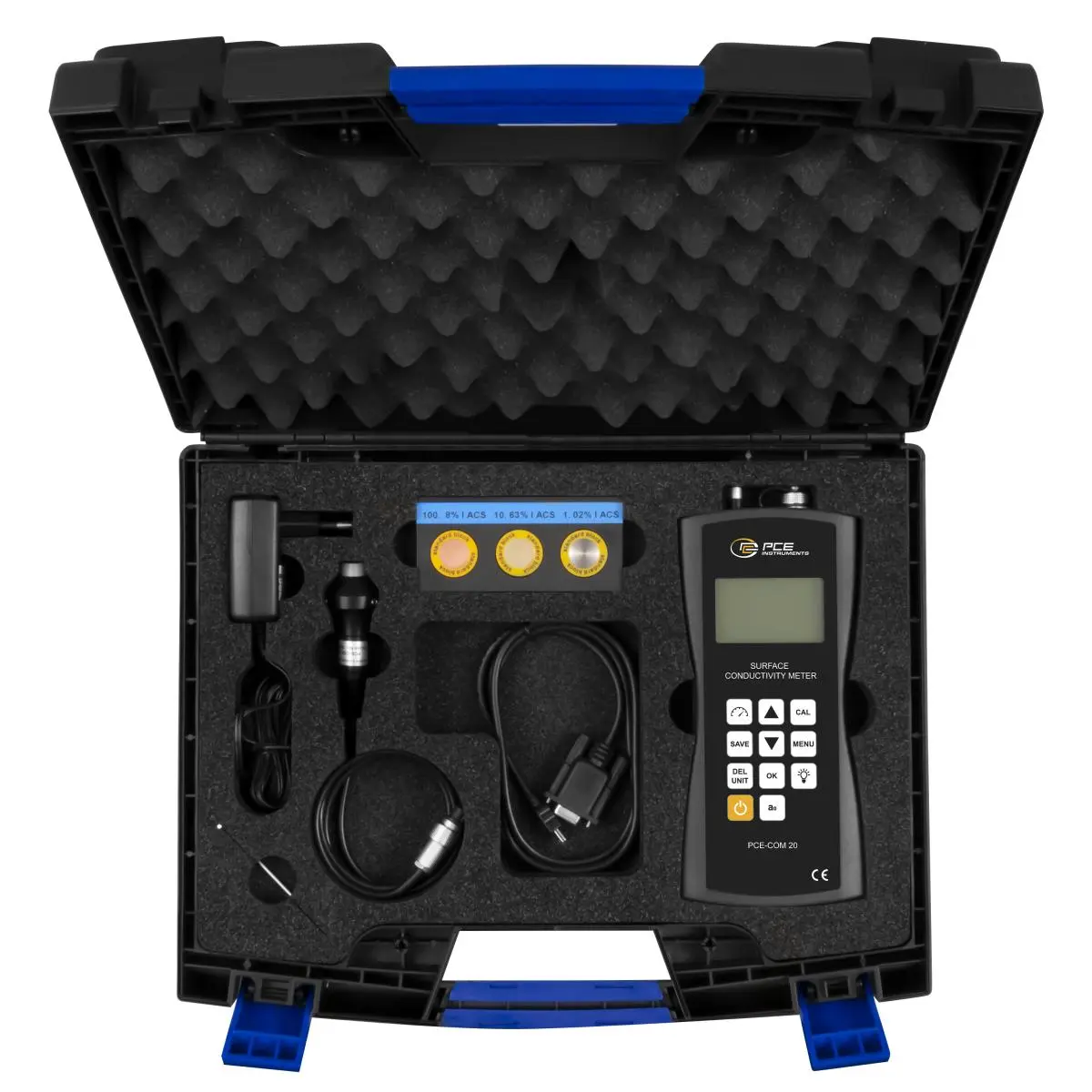
PCE-COM 20 is a portable handheld non-destructive conductivity tester for metals. This non-destructive testing (NDT) device uses eddy current to determine the electrical conductivity of non-ferrous metals such as aluminum and copper.
Featuring an operating frequency of 60 kHz, the conductivity meter has a large measuring range of 0.51 ... 112% IACS with an accuracy of +/- 0.5% at 20°C / 68°F. 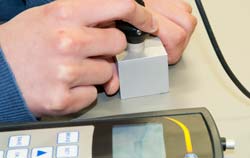 Thanks to a resolution of up to 0.01% IACS, automatic temperature compensation (ATC) and lift-off compensation (up to 500 μm), the device ensures quick, easy, accurate and reproducible measurements of coated or corroded pieces during changing ambient conditions.
Measurement of the electrical conductivity of non-ferrous metals, such as aluminum, copper, titanium, magnesium or bronze, is necessary in applications involving electrical conductors and the characterization of alloys. Typical application areas are the assessment of strength differences in heat-treated or hardened materials, the authenticity testing of coin alloys, the verification of alloy inhomogeneities in critical components and the sorting of materials.
The conductivity meter is powered by an internal battery that can be charged via the interface on the bottom of the unit. In addition to the connection for the charging adapter, there is a USB interface allowing for the transfer of measurement data to a PC for more detailed analysis.
The conductivity test is a part of non-destructive testing (NDT). The conductivity of a material describes its ability to conduct electrical current. Conductivity is always present when there are free charge carriers such as electrons or ions present inside the material.
This can be clearly explained on the example of metallic materials.  Metals consist of – ideally - symmetrically distributed crystal grid structure the nodes of which consist of atoms or ions or molecules. Within this grid structure there is a freely movable electron gas, which, at a defined direction of movement, is referred to as an electric current. It follows that the conductivity presents not only a material property in connection with the electrical current, but also opens up the possibility to determine further material properties indirectly. If the crystal grid structure is disturbed, for example by foreign inclusions, material flaws, big parts or other alloy components, the conductivity changes depending on the degree of the grid distortion. The conductivity test, thus, enables the indirect detection of defects in materials and material properties.
The conductivity test finds therefore its application when reviewing alloy compositions (material sorting), in the evaluation of hardness properties, when material defects such as weariness or cracking are suspected or in the quality control for the classification of workpieces.
| Conductivity | |
| Measuring range | 0,51 ... 112 %IACS |
| Resolution | 0,01 %IACS |
| Accuracy | ±0.5% at +20°C ±1% within the range 0 ... +40°C |
| Conductivity | |
| Measuring range | 0,3 ... 65 MS/m |
| Resolution | 0,1 MS/m |
| Accuracy | ±0.5% |
| Resistance | |
| Measuring range | 0,015388 ... 3,33333 Ω mm²/m |
| Resolution | 1,0E-5 Ω mm²/m |
| Accuracy | ±0.5% at 20°C ±1% in the range 0 ... 40°C |
| Temperature | |
| Measuring range | 0 ... 50 °C |
| Resolution | 0,1 °C |
| Accuracy | ±0.5 °C |
| General technical data | |
| Temperature compensation | Conductivity measurement result is automatically adjusted to the value at 20°C |
| Lift-off compensation | Probe compensation of 0.5 mm |
| Display type | LCD with backlight |
| Display size | 2,7 Inch |
| Storage medium | Micro SD card, Internal memory |
| Storage capacity | 500 Data records |
| Interface | Mini-USB |
| Other dimensions | Measuring probe - Ø14 mm Measuring probe cable length - 1m |
| Menu language | German, Japanese, English, English (GB) |
| Protection class (device) | IP20 |
| Power supply | Input: 100 ... 240V AC | 50/60 Hz Output: 4.2V DC / 1 A |
| Connector type | Device-europlug |
| (Rechargeable) battery | 1 x 3,7 V LP785060 , Lithium polymer battery |
| Capacity | 2500 mAh |
| Performance | 9,25 Wh |
| Operating conditions | 0 ... 50 °C , 0 ... 95 % RH |
| Storage conditions | 0 ... 50 °C , 0 ... 95 % RH |
| Dimensions ( L x W x H ) | 220 x 95 x 35 mm |
| Weight | 415 g |